

Polishing compounds supply the abrasive in machine and hand polishing. Applied to a polishing mop, felt polishing tool or buff, the compound cuts back scratches, refines the surface and brings up the final finish.
Most compounds are supplied as solid bars, also known as grease bars, which are the most efficient way of loading a polishing mop or felt. They are used for pre-polishing and heavy cutting, where metal removal matters as much as reflection, as well as for bright finishing, colouring, buffing and mirror polishing.
Choose the Right Polishing Compound
Most polishing works through three stages: cutting, cut and colour, then mirror finishing. Start with the least aggressive compound that removes the existing marks, because each stage only refines the surface left by the one before.
| I need to… | Use | Pair With |
|---|---|---|
| Remove marks, scratches, welds, pits and blemishes | Metal Cutting Compounds such as Ferrocut 3050, Abracut or Apollo Tripoli | A dry sisal mop for stock removal; an impregnated sisal mop for more cut, or a white stitched mop for a softer action |
| Give a good cut and colour on ferrous and non-ferrous metals | General polishing compounds in Metal Polishing Compounds | A white stitched mop |
| Achieve a mirror shine | High-gloss finishing compounds such as Lea compounds (UK-made), Menzerna (German-made) and Hyfin, from titanium and steel to aluminium, gold and silver | A loosefold mop; a Reflex mop, the softest, for precious metals |
| Polish stainless steel | Stainless Steel Polishing Compounds, from heavy cut to mirror | See How to Achieve a Mirror Finish on Stainless Steel |
| Polish jewellery and precious metals | Tripoli, then Rouge or Dialux | See Polishing Jewellery and Precious Metals |
| Polish plastics | Menzerna GW16 or Dialux White | See Polishing Plastics |
Pre-polishing is the most important stage. Once polishing starts, any marks left behind become more visible, so make sure the cutting stage has removed them before moving on.
-
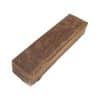 Lea Apollo Tripoli Polishing Compound – Industrial Bar
£5.76 incl VAT
-
 Lea Ferrocut (3050) Heavy Cutting Compound – Industrial Bar
£11.02 incl VAT
-
Lea Abracut Cutting and Pre-Polishing Compound – Industrial Bar
£14.42 incl VAT
-
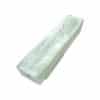 Lea Hero (2000D) Cut and Colour Compound – Industrial Bar
£16.63 incl VAT
-
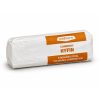 Cannings Hyfin Stainless Steel Polishing Compound – Industrial Bar
£8.20 incl VAT
Polishing Jewellery and Precious Metals
Jewellery and precious metals are usually polished in two stages. Tripoli, a brown cutting compound, removes fine scratches and file marks; a finishing compound then colours the surface to a deep, bright shine.
- Cut with Apollo Tripoli on a firmer mop or felt.
- Clean the piece thoroughly.
- Finish with Rouge or the Dialux colour matched to the metal, on a soft, clean mop or felt.
- Clean again to remove compound residue.
Dialux colours are matched to the metal: Rouge (Red) for gold, White (Blanc) for silver, and Black for platinum and palladium. Blue, Green and Grey cover chrome and hard metals; see the full Dialux colour chart.
Use a soft loosefold or Reflex mop for the finishing stage, Cotton Ring Buffs for the inside of rings, or felt polishing tools for detailed areas.
-
Lea Apollo Tripoli Polishing Compound – Industrial Bar
£5.76 incl VAT
-
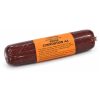 AA Rouge Polishing Compound – Dry Ultrafine Rouge for Gold and Silver (227g)
£4.15 incl VAT
-
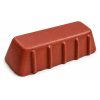 Red Admiral RS/2 Rouge Polishing Compound – Soft Finishing Rouge for Precious Metals (340g)
£8.12 incl VAT
-
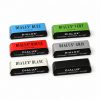 Dialux Polishing Compounds – Rouge, White, Black, Blue, Green & Grey 150g Bars
Price range: £4.45 through £6.90 incl VAT
-
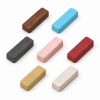 Small 4x1 Polishing Compound Bars – Lea Cutting & Finishing Bars for All Materials
£2.51 incl VAT
Polishing Plastics
Plastics soften with heat, so use a compound made for plastics with a soft mop or felt, light pressure and a moderate speed. Menzerna GW16 and Dialux White are both widely used for acrylic and other plastics.
Remove scratches with abrasives first; compounds refine and polish. For the full process, read Plastic Polishing Tools and How to Polish Plastic or browse Plastics, Acrylic & Resin Polishing Compounds.
How to Apply a Polishing Compound
The bar is applied to the rotating mop or felt. Frictional heat transfers the abrasive, held in its binder, onto the working face, where it polishes the part. Each binder is designed for its application: the lubricity and mop adhesion needed depend on the material and rake.
- Load lightly. Hold the bar against the running mop or felt for a second or two, and reapply little and often rather than overloading it.
- Use one mop or felt per compound. For example, keep one mop for Apollo Tripoli and another for Dialux Rouge, so coarser abrasive is not carried into the finishing stage.
- Keep the working face clean. Dress or replace a mop or felt that becomes glazed or contaminated.
- Clean between stages. Remove residue with Solvent Cleaner Spray before moving to a finer compound.
For hand polishing, apply a small amount of compound to a Micro-Mesh Cotton Polishing Cloth. For colour-by-colour tips, see how to use Dialux compounds.
In automatic polishing, bars can be fed onto the mop by a bar applicator, which gives a more even build-up and less mess. Bar size can be chosen to suit the application.
Match the Compound to a Mop or Felt
| Stage | Mop or Felt |
|---|---|
| Cutting | Dry sisal mop for stock removal; impregnated sisal for more cut |
| Cut and colour | White stitched mop |
| Final finish | Loosefold mop; Reflex mop, the softest, for precious metals. On harder metals the softest mop is not always needed. |
| Detailed areas | Felt polishing tools |
| Inside rings | Cotton Ring Buffs |
For more detail, read How to Choose the Right Polishing Mop and Choosing the Right Felt Grade and Density.
-
 RODA Mops - Dry Sisal Cutting & Polishing Mops (Coarse)
Price range: £5.76 through £34.93 incl VAT
-
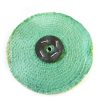 Impregnated Green Dry Sisal Polishing Mops (Harder)
Price range: £5.32 through £40.54 incl VAT
-
 RODA Mops - White Stitched Cutting & Polishing Mops (Hard)
Price range: £5.76 through £48.85 incl VAT
-
 RODA Mops - Loosefold WDR Polishing Mop (Soft)
Price range: £5.28 through £86.93 incl VAT
-
 Loosefold Reflex Polishing Mop (Softest)
Price range: £9.30 through £114.74 incl VAT
Troubleshoot Common Problems
| Problem | Likely Cause | What to Do |
|---|---|---|
| Fine scratches or swirls after finishing | Coarser compound carried into a finishing stage | Clean the part and use a dedicated mop or felt for each compound |
| Marks still visible after the mirror stage | Cutting stage not completed | Return to a cutting compound, then work back through the stages |
| Compound smearing or leaving residue | Too much compound on the mop | Load less, more often, and clean the part with solvent cleaner |
| Mop glazed and no longer cutting | Overloaded or contaminated mop | Dress or replace the mop and reload lightly |
| Plastic clouding or softening | Too much heat | Use lighter pressure, a softer mop and a lower speed |
Need Help Choosing a Compound?
Contact Moleroda with the workpiece material, its current surface condition, the mop, felt or machine you are using and the finish you need.
Frequently Asked Questions (FAQs)
A polishing compound is an abrasive held in a binder, usually supplied as a solid bar. Applied to a mop, felt or cloth, it cuts and polishes the surface; the abrasive grade decides how much it cuts and how bright a finish it leaves.
Hold the bar against the running mop or felt for a second or two to load it, then reapply little and often. Overloading leaves residue rather than improving the cut.
Yes. Keep a dedicated mop or felt for each compound so coarser abrasive is not carried into the finer stages.
Cut with Tripoli to remove fine scratches and file marks, then finish with Rouge or the Dialux colour matched to the metal: Rouge for gold, White for silver, Black for platinum and palladium.
Yes. Menzerna GW16 and Dialux White are widely used on acrylic and other plastics. Use a soft mop or felt, light pressure and a moderate speed to avoid heat build-up.
Start with a high-cut compound such as Ferrocut 3050 or Abracut on a sisal mop, then work through to a mirror-finishing compound. See Stainless Steel Polishing Compounds for the full range.