
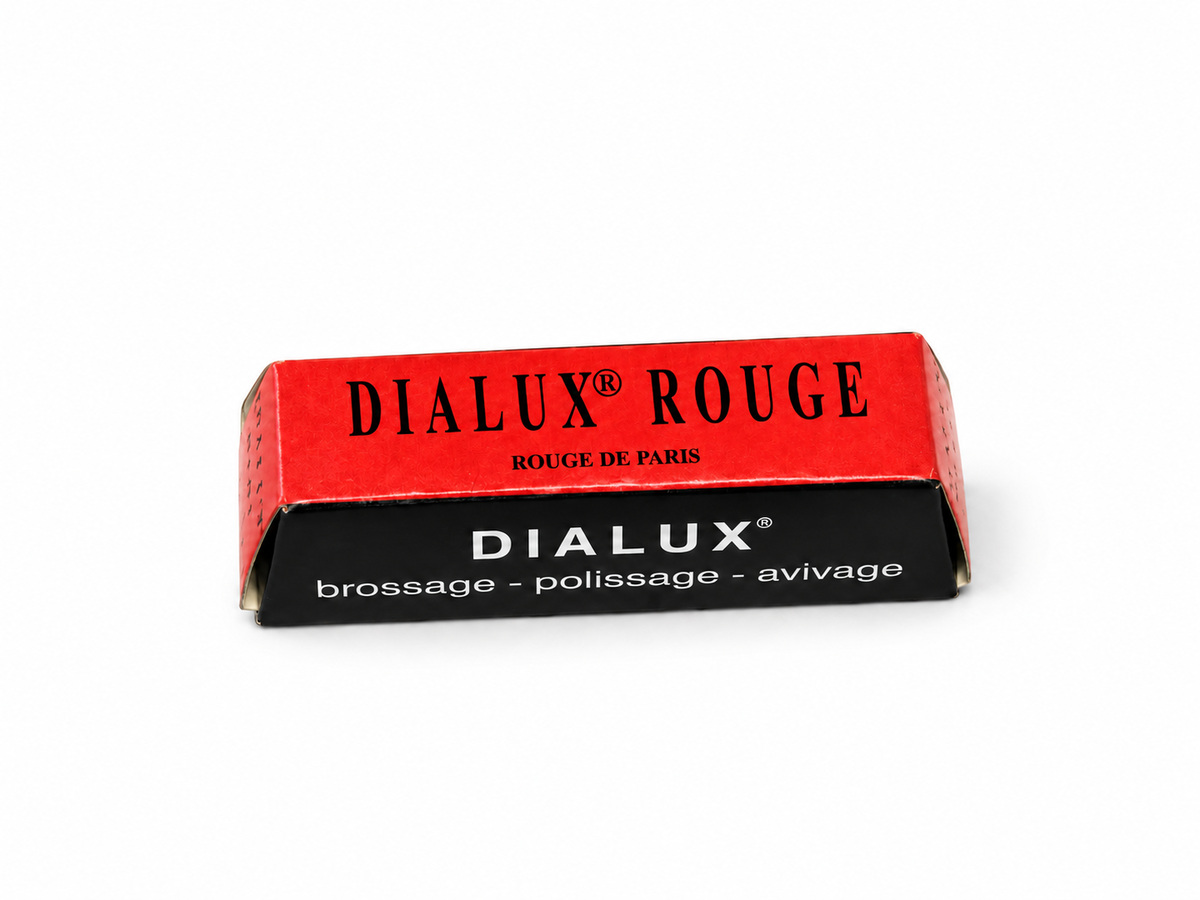
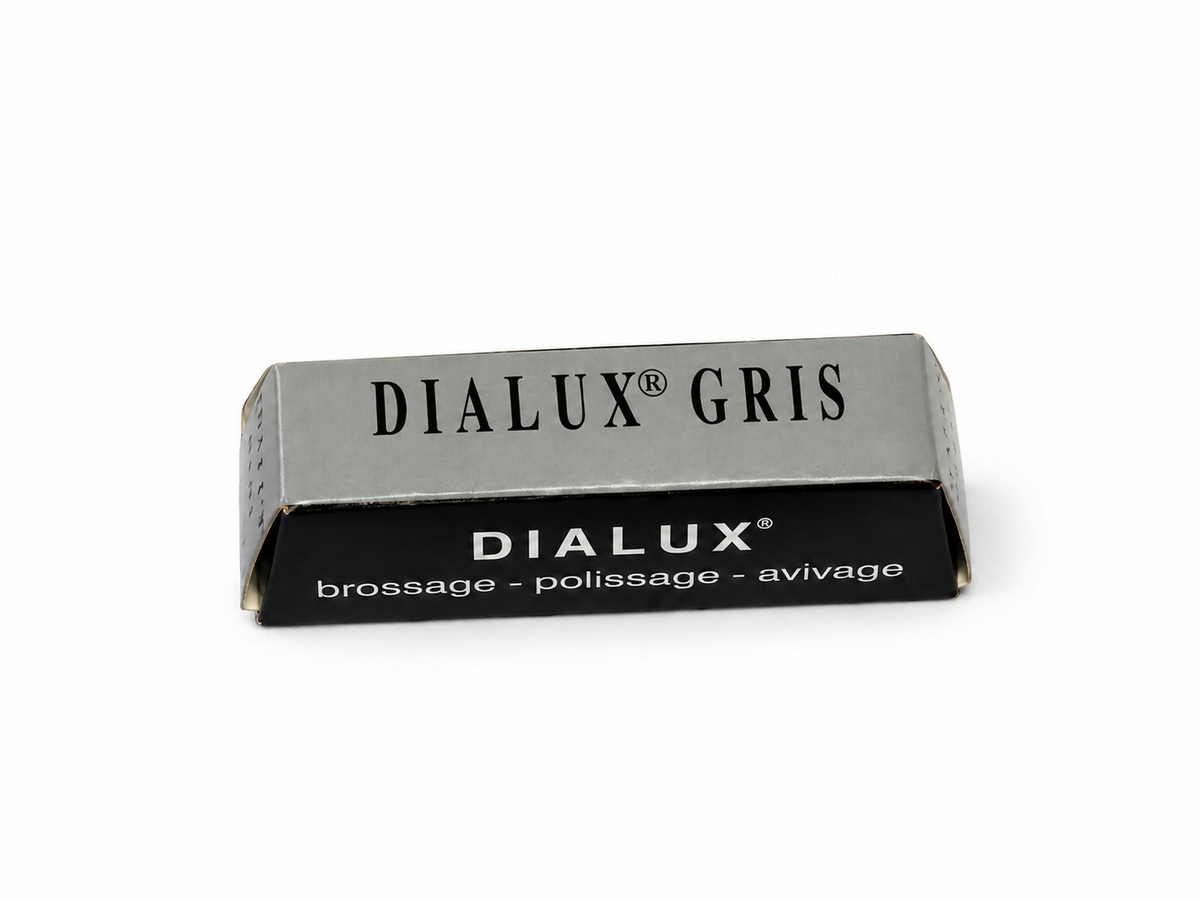
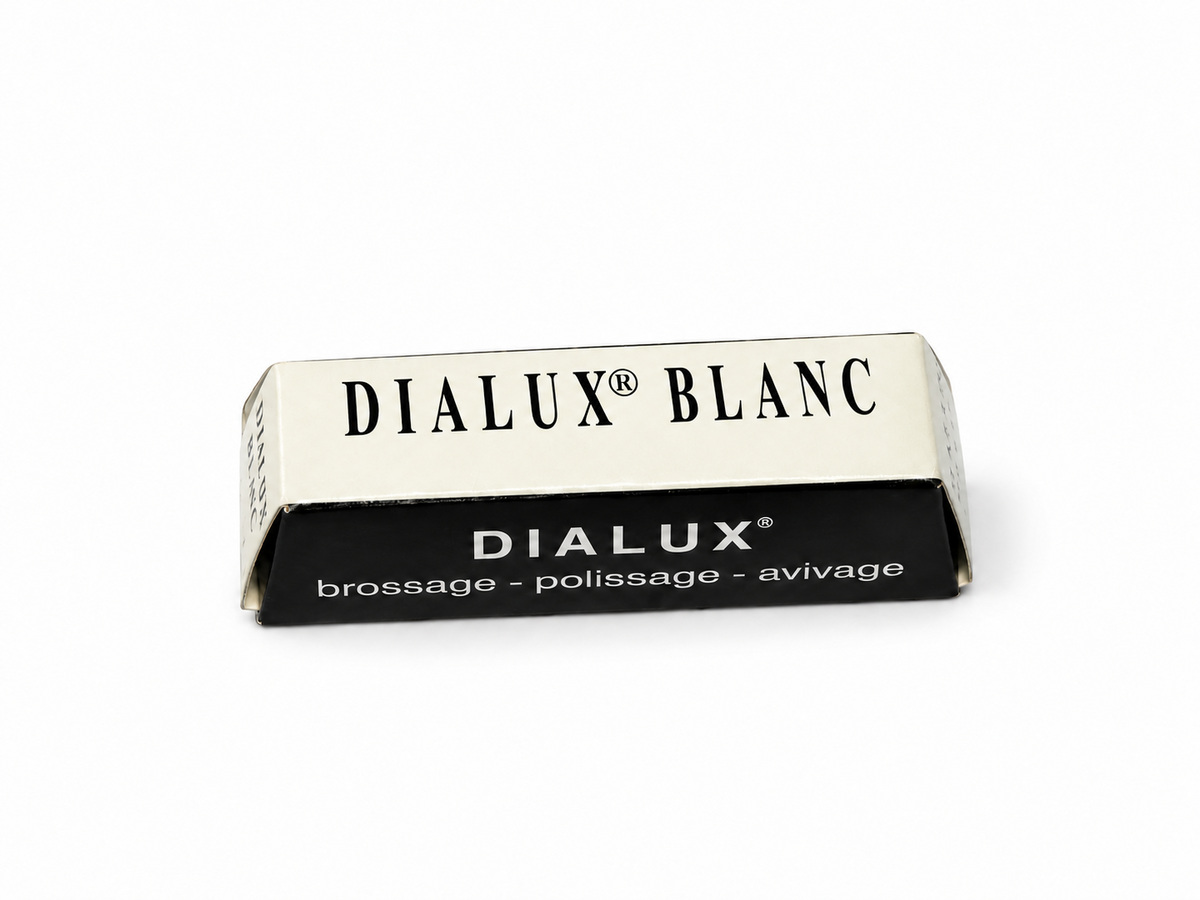
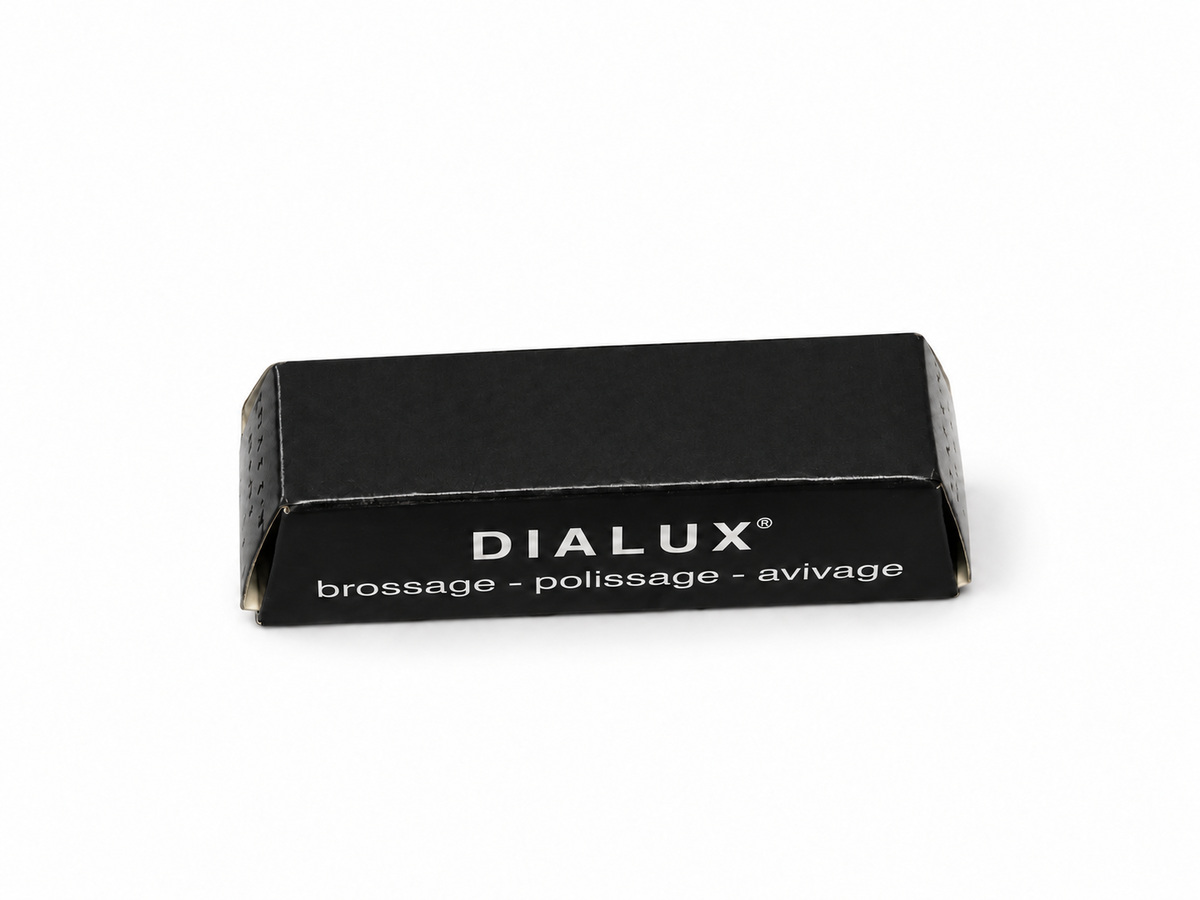
Dialux Polishing Compounds for Precious, White and Hard Metals
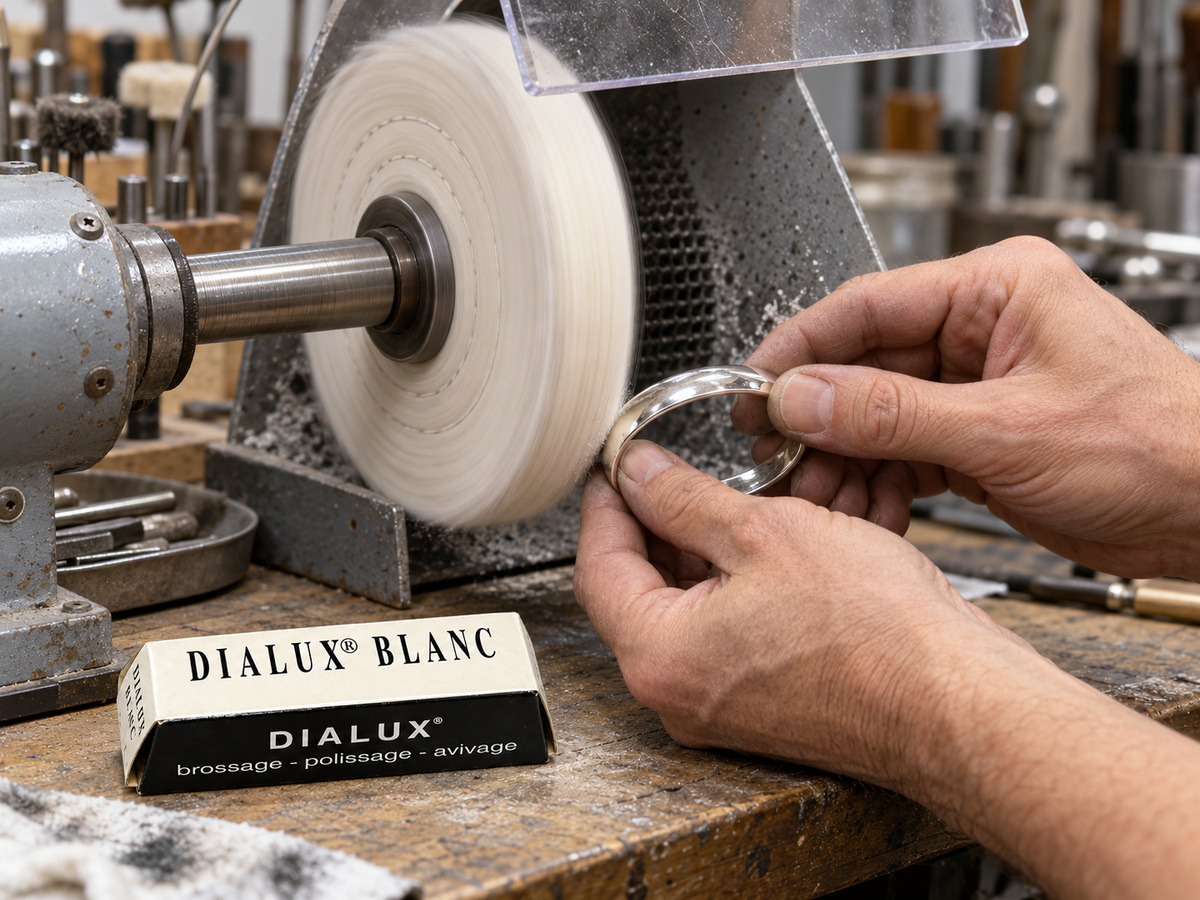
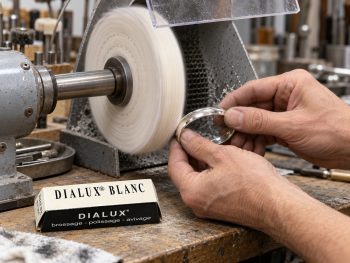
Dialux polishing compounds are a long-established French range of finishing bars, often manufactured in Germany by Osborn, and widely used by jewellers, silversmiths, goldsmiths and knife makers. They are applied with felt polishing tools or polishing mops and buffs to bring metals to a bright, high-colour finish once the surface has been prepared, and can be used on a polishing cloth for hand polishing.
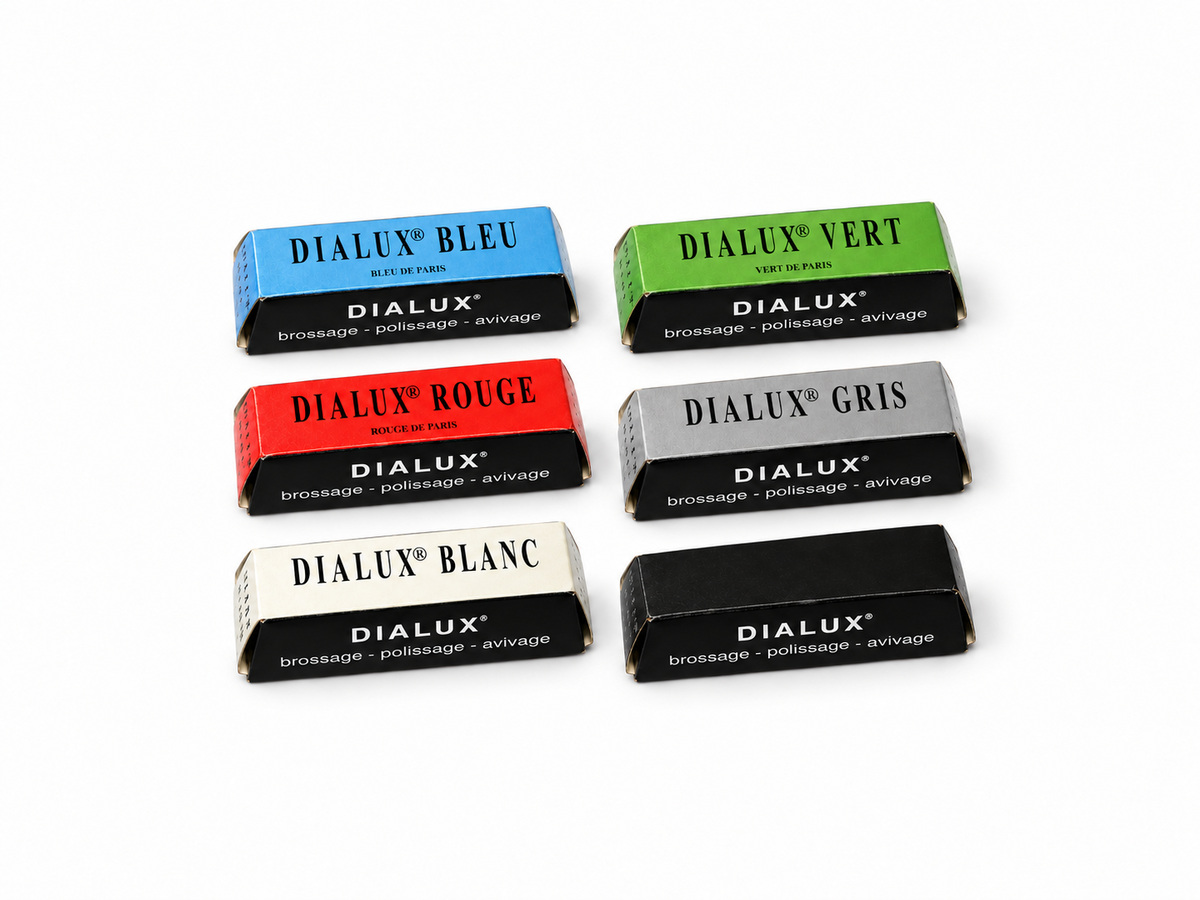
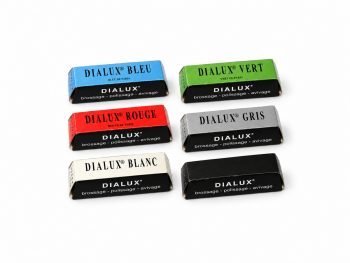
The range is supplied as 150g bars in six colours, each formulated for a different group of metals: Rouge for gold, White for silver and plastics, Black for platinum and palladium, and Blue, Green and Grey for chrome, hard metals and deeper scratch removal. Each bar is sold individually.
Most Dialux colours are super finishing compounds. Grey is the exception, with a cutting action for removing deeper scratches on hard metals. Where a surface has file marks or heavy scratches, start with a cutting compound such as Apollo Tripoli and finish with the matching Dialux colour.
For more background on compound stages, read How to Use Polishing Compounds.
Dialux Colour Chart: Choose the Right Compound
Each Dialux colour is matched to a group of metals. Choose by the metal being polished first, then by how much refinement the surface still needs.
| Colour | Characteristic | Choose It For |
|---|---|---|
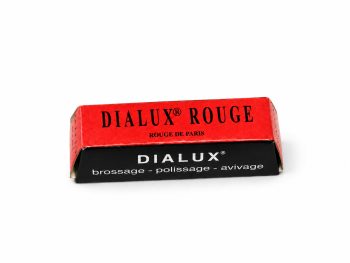
| Rouge (Red) | Super finishing compound | Gold and other precious metals |
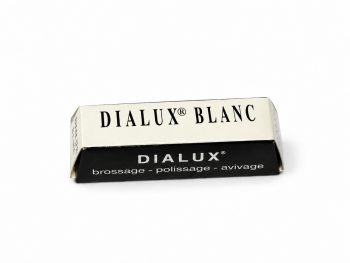
| White (Blanc) | Premium super finishing compound for white metals | Silver and plastics; formulated for silversmiths and goldsmiths, and widely used on acrylic and other plastics |
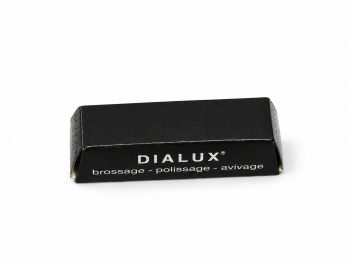
| Black | Finishing compound for harder precious metals | Platinum and palladium; generally good on harder metals |
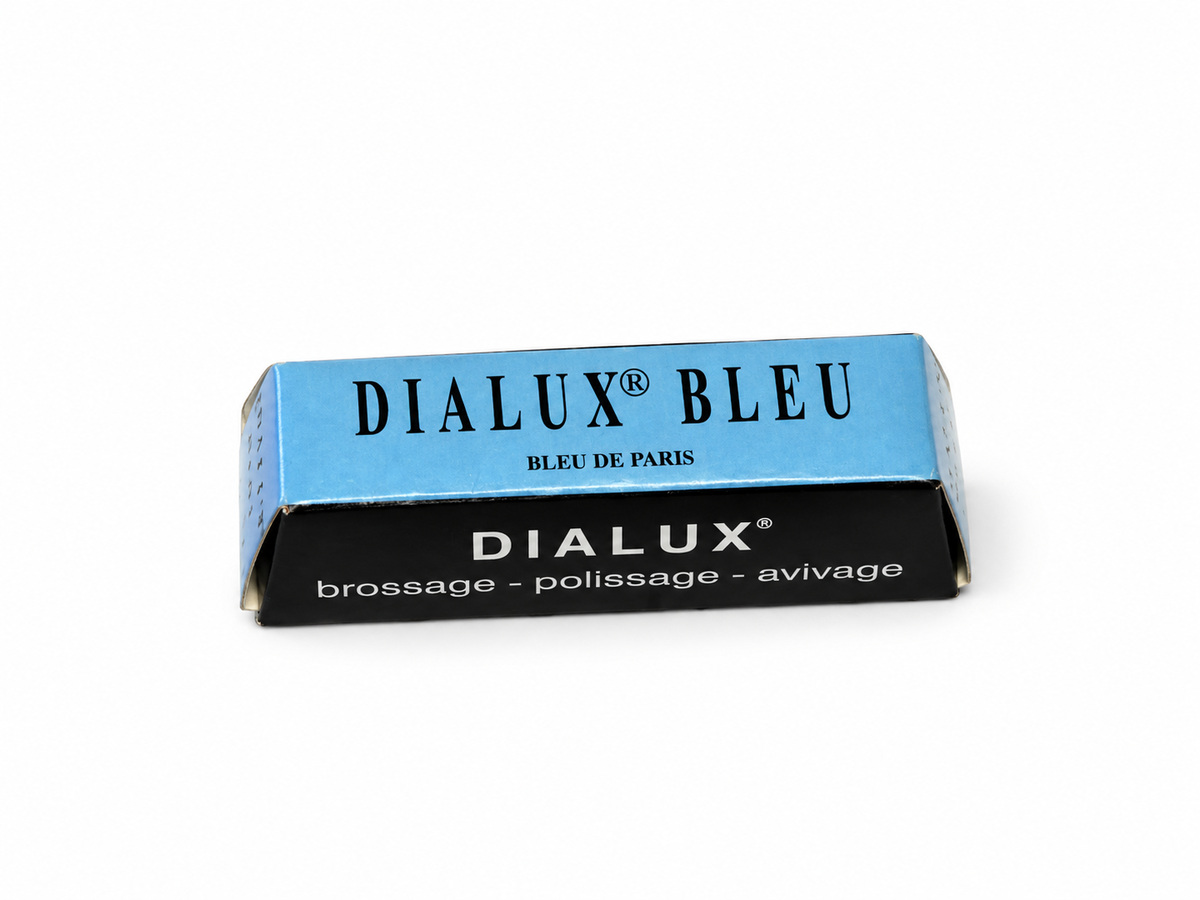
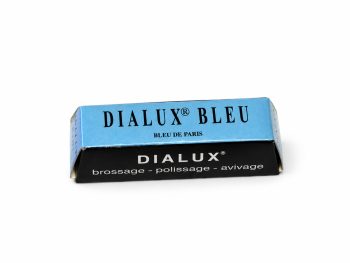
| Blue (Bleu) | Super finishing compound | All metals, especially chrome alloys |
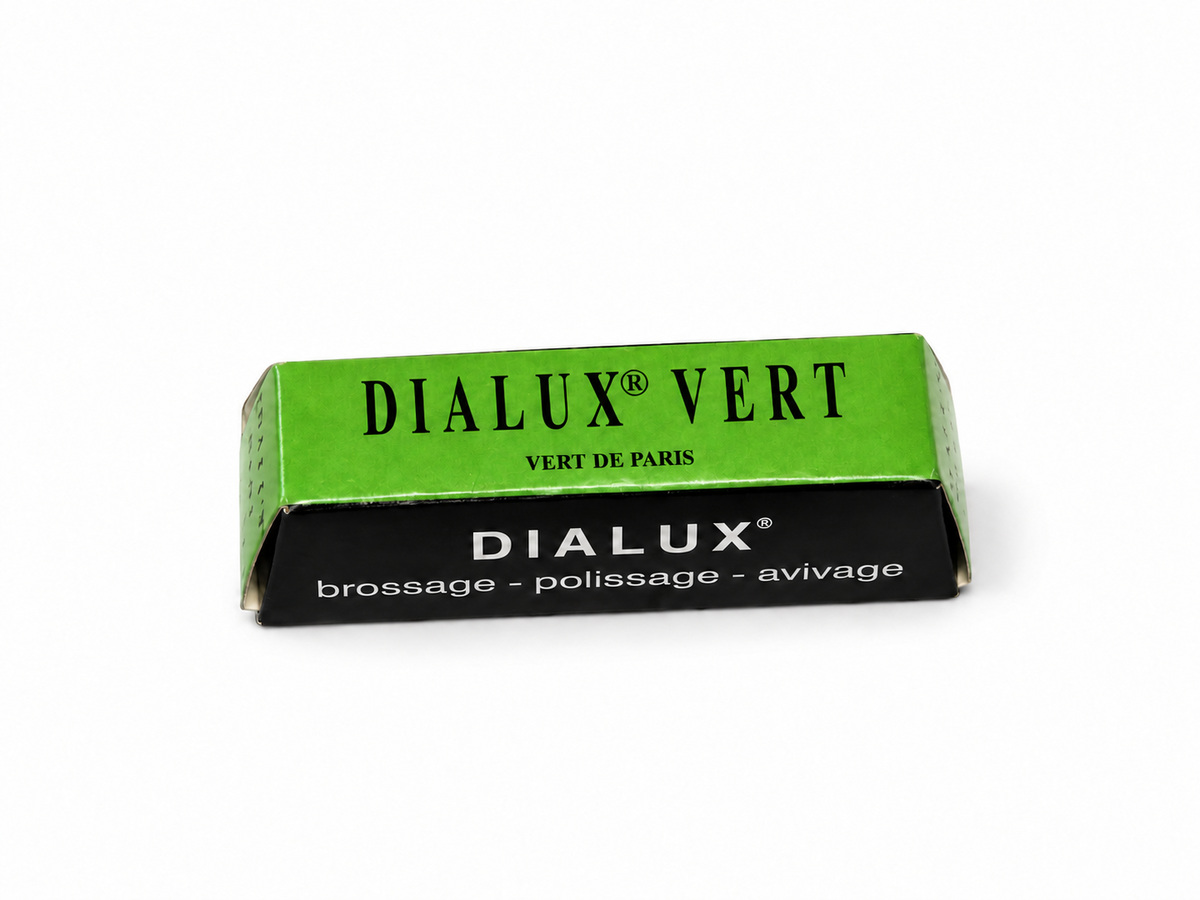
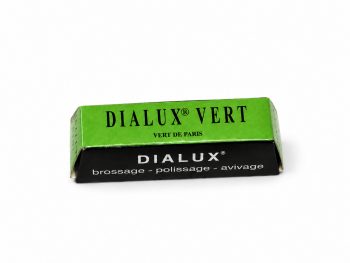
| Green (Vert) | Super finishing compound for hard metals | Chrome and platinum |
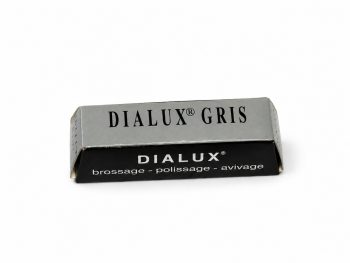
| Grey (Gris) | Cutting action; slightly greasy | Removing deeper scratches on hard metals |
Colour names refer to the Dialux range only. Green and white bars in other compound ranges are formulated differently, so compare compounds by their stated use, not by colour alone.
How to Use Dialux Polishing Compounds
Use a small amount on a clean felt or mop.
Dialux works best on a lightly and evenly loaded felt or mop with a clean working face.
- Prepare the surface. Remove file marks and deeper scratches first, using Grey Dialux or a cutting compound such as Apollo Tripoli.
- Choose a dedicated felt or mop. Use felt polishing tools for controlled work on detailed areas, or a polishing mop (buff), such as a muslin or white finishing mop, for larger surfaces. Keep each one for a single colour.
- Load lightly. Hold the bar briefly against the running felt or mop, and reapply little and often rather than overloading it.
- Keep the working face clean. A clean edge or face gives the best results; dress or replace a felt or mop that becomes glazed or contaminated.
- Clean between stages. Remove compound residue with Solvent Cleaner Spray before moving to another colour.
For hand polishing, apply a small amount to a Micro-Mesh Cotton Polishing Cloth. Use a separate felt, mop or cloth for each colour, and wear suitable eye protection when machine polishing.
Which Rouge or Finishing Compound Should I Choose?
| Product | Choose It When |
|---|---|
| Dialux Polishing Compounds | You want a specialist six-colour finishing range for precious, white and hard metals, sold as individual 150g bars. |
| AA Rouge | You want a dry, ultrafine rouge for finishing gold and silver; 227g bar. |
| Red Admiral RS/2 | You want a soft, clean finishing rouge with excellent colour for precious metals; 340g bar. |
| Small 4×1 Compound Bars | You want small 4 x 1 inch bars for samples, hobby work or small jobs, including a rouge option. |
| Hyfin | You need a white finishing compound for all metals, sold per bar. |
Need to remove heavier scratches first?
Choose Apollo Tripoli for aluminium, brass and precious metals, or browse Metal Cutting Compounds.
Operating Guidance
- Inspect the felt or mop before use and replace it if worn, loose or contaminated.
- Fit the felt or mop securely to a suitable spindle, mandrel or machine and use the guarding provided.
- Start at a moderate speed and use light pressure; excess pressure builds heat.
- Keep a separate felt or mop for each colour to avoid cross-contamination.
- Wear eye protection and use extraction where polishing dust is produced.
Product Specifications
| Brand | Dialux (Osborn) |
|---|---|
| Product type | Solid polishing compound bar for use with felt polishing tools, polishing mops and buffs |
| Unit of sale | One bar |
| Bar weight | 150g |
| Colours | Rouge (Red), White (Blanc), Black, Blue (Bleu), Green (Vert), Grey (Gris) |
| Origin | French range, often manufactured in Germany by Osborn |
| Function | Super finishing; Grey also removes deeper scratches on hard metals |
| Felt or mop required | Yes – felt polishing tools or polishing mops sold separately; a polishing cloth can be used for hand polishing |
| Typical applications | Finishing gold, silver, platinum, palladium, chrome and hard metals in jewellery, silversmithing and knife making, and polishing plastics with Dialux White |
Need Help Choosing a Dialux Colour?
Contact Moleroda with the metal being polished, its current surface condition, the felt, mop or machine you are using and the finish you need.


