Every stainless steel weld leaves heat tint, and that discoloured zone is where corrosion starts. Cleaning it off is not just cosmetic: it restores the corrosion resistance that made stainless steel the right choice in the first place.
There are two main ways to do it. Pickling paste removes the tint chemically with a strong acid paste. Electrolytic weld cleaning, often called a TIG brush, uses a low-voltage current and an electrolyte. This guide explains how each works, where each fits, and how to choose between them.
Why Stainless Steel Welds Need Cleaning
Stainless steel resists corrosion because chromium in the steel forms a thin, invisible passive layer on the surface. Welding heats the metal enough to grow a thicker coloured oxide, the straw, blue and brown heat tint you see along the seam, and draws chromium out of the steel just beneath it.
That chromium-depleted zone can no longer protect itself properly. Left untreated, it is where rust spots and pitting appear first, particularly in wet, salty or hygienic environments such as food processing, pharmaceutical and marine applications.
Cleaning the weld removes both the visible tint and the depleted layer underneath, so the surface can re-form a uniform passive layer.
Pickling vs Passivation
The two terms are often used together, but they describe different stages:
- Pickling removes the heat tint, oxide scale and chromium-depleted layer from the weld and heat-affected zone.
- Passivation helps the protective passive layer re-form on the clean surface afterwards.
Both pickling paste and electrolytic cleaning start the passivation process. Where a specification or hygiene standard calls for it, a separate passivation stage, such as Antox 90E, can follow.
Method 1: Pickling Paste
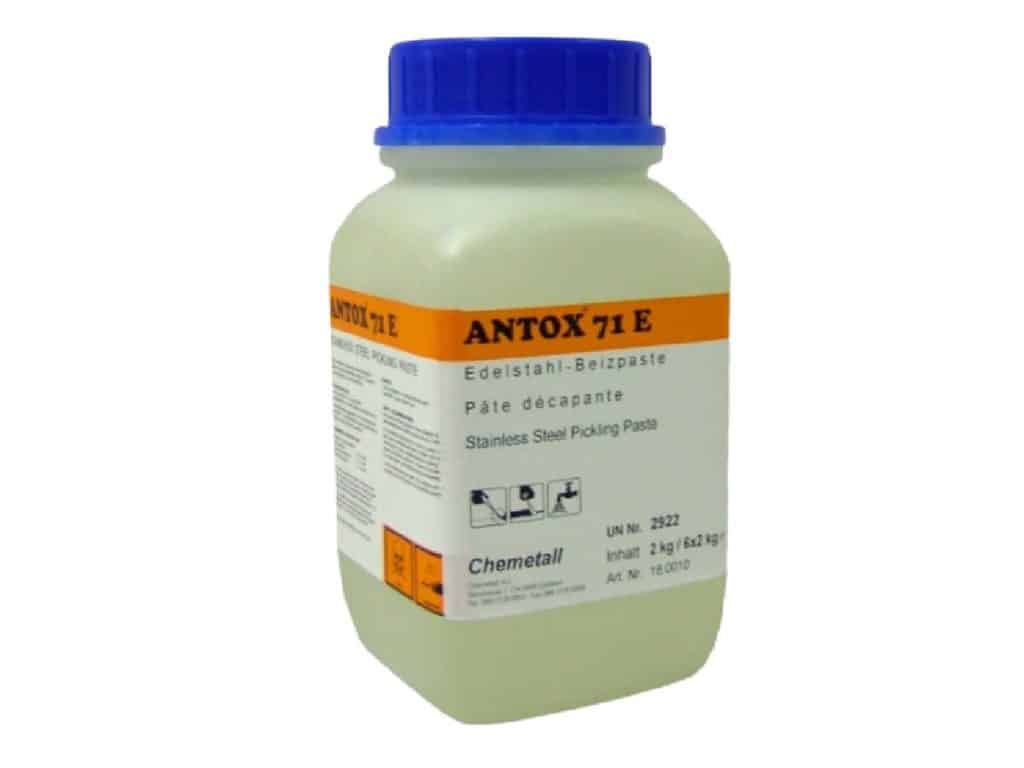
Pickling paste is a thick acid gel, typically based on nitric and hydrofluoric acid, that is brushed onto the weld and left to dissolve the tinted layer. Antox 71E Plus is a widely used example: a thixotropic paste that stays in place on vertical and overhead welds.
How it is used:
- Clean the weld area of grease and dirt, and stir the paste well.
- Brush it over the weld seam and the whole heat-affected zone.
- Leave it to react, typically 15–60 minutes depending on temperature, grade and how heavy the tint is.
- Neutralise it with a neutralising paste such as Antox NP.
- Rinse thoroughly with clean water and dispose of the rinse water in line with local regulations.
Where it works well: long weld runs, heavy heat tint, MIG as well as TIG welds, large fabrications, pipework and awkward shapes. One application treats the whole seam and heat-affected zone at once, and coverage is high: approximately 80–150 running metres of weld per kilogram of Antox 71E Plus.
What to plan for: hydrofluoric acid is highly hazardous. Pickling paste needs chemical-resistant gloves, goggles, face protection and good ventilation, an eyewash and emergency shower nearby, and a controlled way to neutralise and dispose of rinse water. It is also classed as dangerous goods, so it travels by specialist carriage. Some pastes can leave a faint white halo around the pickled area.
Method 2: Electrolytic Weld Cleaning
Electrolytic weld cleaners pass a low-voltage current through an electrolyte between a cleaning head and the earthed workpiece. As the head moves along the weld, the tinted oxide is removed and the surface is left clean. The Electro Wand EW Combi uses a paddle with a replaceable sock for longer seams and a brush for corners and confined spaces, and switches its power output automatically between them.
How it is used: clamp the earth lead to the workpiece, wet the brush or sock with electrolyte, draw the head along the weld until the tint clears, then wipe off the residue with a damp cloth and rinse where a hygienic finish is required.
Where it works well: TIG welds on sheet, tube and fabrications, especially visible or brushed and polished surfaces where the surrounding finish must stay unmarked. There is no waiting for a reaction and no neutralising step.
What to plan for: it is not acid-free. The Electro Wand electrolyte is a corrosive phosphoric acid solution, so gloves and eye protection are still needed. It avoids hydrofluoric and nitric acid, but it needs a machine and mains power, it works along the seam one pass at a time, and it is best suited to TIG weld tint rather than heavy scale.
Side-by-Side Comparison
| Pickling Paste | Electrolytic Cleaning | |
|---|---|---|
| How it works | Acid paste dissolves the tinted layer | Current and electrolyte remove the tint as the head passes |
| Chemistry | Nitric and hydrofluoric acid | Phosphoric acid electrolyte; no hydrofluoric or nitric acid |
| Process time | 15–60 minutes reaction, then neutralise and rinse | Cleans as you go, then wipe and rinse |
| Best for | Long runs, heavy tint, MIG and TIG, large or awkward fabrications | TIG welds on sheet and fabrications with a finish to protect |
| Surrounding finish | May leave a faint white halo | Left unmarked |
| Equipment | Acid-resistant brush | Weld cleaning machine, 110V or 240V |
| Safety and waste | Highly hazardous; neutralise before discharge | Corrosive electrolyte; less hazardous chemistry |
| Carriage | Dangerous goods, specialist carriage | Electrolyte is a corrosive liquid |
Which Should You Choose?
- Choose pickling paste for long or heavily tinted welds, MIG welds, large fabrications and pipework, or where you need to treat a lot of weld in one go and can manage hydrofluoric acid safely.
- Choose electrolytic cleaning for TIG welds on visible sheet and fabrication work, where you want to avoid hydrofluoric acid, protect the surrounding finish and clean as you go.
- Use both if your work covers both: keep pickling paste for heavy work and an electrolytic cleaner for finished, visible welds.
Whichever method you use, follow the safety data sheet, wear suitable protective clothing, and use the matching products from one system rather than mixing brands.
Frequently Asked Questions
Frequently Asked Questions (FAQs)
Neither is better for every job. Electrolytic cleaning suits TIG welds where the surrounding finish must stay unmarked and hydrofluoric acid is unwelcome. Pickling paste is usually faster for long runs, heavy heat tint and large fabrications.
It removes the tinted, chromium-depleted layer and promotes re-forming of the passive layer, in the same way as pickling. Where a specification requires a separate passivation stage, apply a passivator afterwards.
Yes. Pickling paste treats MIG and TIG welds and heavier oxide scale. Electrolytic cleaners are mainly designed for TIG weld tint.
Mechanical cleaning removes the colour but scratches the surface, is slow on long welds, and a carbon steel brush can leave iron contamination that later rusts. Chemical and electrolytic methods clean without abrading the surrounding finish.
After pickling paste, yes: neutralise with a neutralising paste such as Antox NP before rinsing. After electrolytic cleaning, wipe off the electrolyte residue and rinse with clean water where a hygienic finish is required.

The difference between MIG, TIG and laser welding
This blog helps to explain the difference between MIG,TIG and Laser welding. So that you [...]
Mar

Precision Repair Welding
Finally, at Moleroda we have the solution for detailed repair welding and we are offering [...]
Sep

The Complete Guide to Laser Welding for Jewellers & Precision Workshops
Laser welding has revolutionised the way jewellers, goldsmiths, dental technicians, and precision engineers work. Whether [...]
Sep