
Product Guides & Tips
On this page you will find handy videos and features explaining how to use many of the Moleroda products and tools.
We also have a Youtube Channel that hosts lots videos detailing how to get the best out of your Moleroda tools and products.
If there’s something you can’t find, cal us for free advice: 01722 711 988. We’re always happy to give help.
Or if there is a video guide that isn’t currently present, but you think would be useful, please let us know and we’ll do our best to make one.
Latest Moleroda Product Guides

Using Emery Cloth on a Lathe Safely: HSE Guidance, PUWER and Controlled Stopping
HSE guidance draws a clear line between direct hand application and controlled application using suitable equipment: HSE’s dedicated guidance applies to emery cloth. Other flexible [...]
Read more...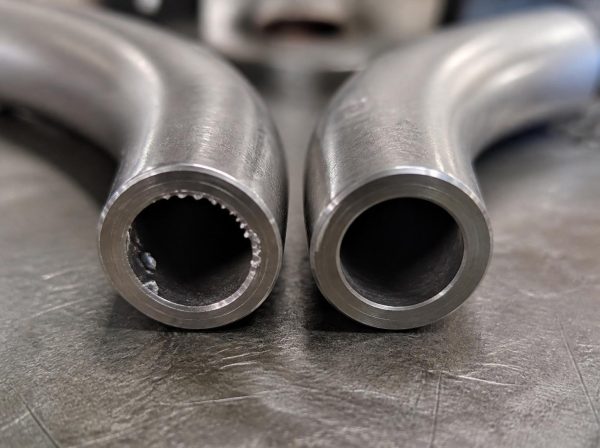
How to Deburr Small Holes Inside Curved Tube
Internal burrs are difficult because the burr is often hidden on the far side of the drilled hole. The outside of the hole may look [...]
Read more...
RODA Abrasive Nylon Grades Explained – Colour, Grit, Finish & Material Guide
Abrasive nylon is a non-woven surface conditioning material made from tough synthetic nylon fibres formed into an open, porous web. The web is bonded with [...]
Read more...
How to Deburr and Finish Composite Materials Safely
Important: These are surface speed recommendations, not universal machine RPM settings. The correct RPM depends on the diameter of the tool being used. For a [...]
Read more...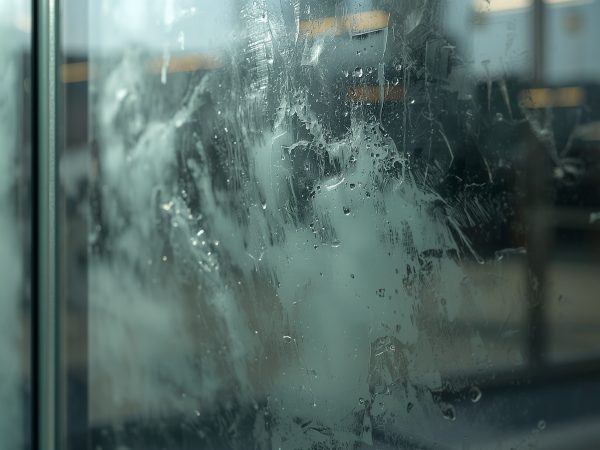
What Is Glass Ghosting? Heat Stains, Skunk Marks and Tempered Glass Defects Explained
Glass ghosting is a surface appearance defect that can occur during the tempering process. It is not always a scratch in the traditional sense. Instead, [...]
Read more...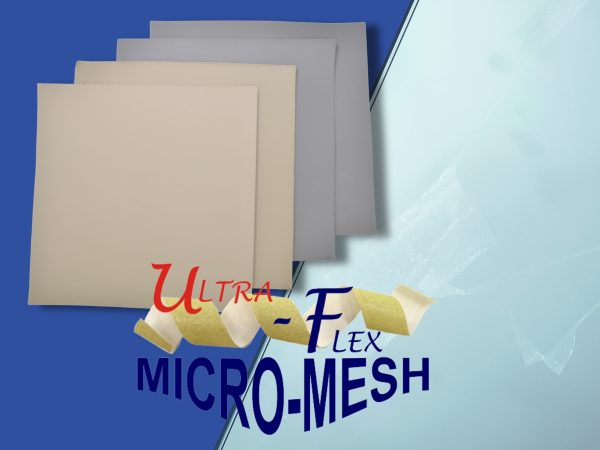
How to Remove Heat Stains and Ghosting from Tempered Glass with Micro-Mesh
For a basic hand trial, you will need: If you are testing the process for the first time, the Micro-Mesh Glass Restoration Starter Kit is [...]
Read more...
Micro-Mesh for Glass: Should You Use Sheets, Rolls, Discs or Pads?
The best Micro-Mesh format depends on how the glass is being worked, not just on the grade. Before choosing the format, consider: For most new [...]
Read more...The Complete Mould Tool Polishing Workflow – Mould Tool Polishing Guide (Part 7)
Before polishing can begin, the damaged surface layer left by EDM or machining must be completely removed. This phase establishes the geometry and scratch pattern [...]
Read more...Choosing the Correct Mounted Felt Bobs and Polishing Tools – Mould Tool Polishing Guide (Part 6)
Not all felt bobs behave the same way. The density of the felt determines how much the tool compresses against the steel surface. Hard felt [...]
Read more...Diamond Polishing on Hardened Tool Steel – Mould Tool Polishing Guide (Part 5)
Diamond compounds do not behave like stones or ceramic abrasives. They do not remove deep scratches. Instead, they: If deeper scratches remain at this stage: [...]
Read more...Surface Preparation Before Diamond Polishing – Mould Tool Polishing Guide (Part 4)
For a broader overview of the complete process, see our Complete Guide to Mould Tool Polishing Guide. One of the most common misconceptions in mould [...]
Read more...The Complete Guide to Mould Tool Polishing
Mould tool polishing is a critical process in toolmaking and precision manufacturing. The quality of a mould’s surface finish directly affects part appearance, release performance [...]
Read more...
BOFA DustPRO Comparison Guide: 250 vs 400 vs Universal vs 1000 iQ
BOFA DustPRO 250 Light-Duty Extraction Unit Compact entry-level system designed for light-duty dust extraction and single-user workstations. BOFA DustPRO 400 Industrial Extraction Unit Mid-range system [...]
Read more...
What Size Dust Extraction Unit Do I Need? (Complete Guide)
Dust extraction isn’t just about cleanliness — it’s a legal and safety requirement in many industrial environments. Proper systems remove airborne particles, reduce health risks, [...]
Read more...
Ultrasonic Polishing Systems – Mould Tool Polishing Guide (Part 3)
In the previous article, we explored how ceramic polishing files and stones are used for scratch removal and surface refinement. For a complete overview of [...]
Read more...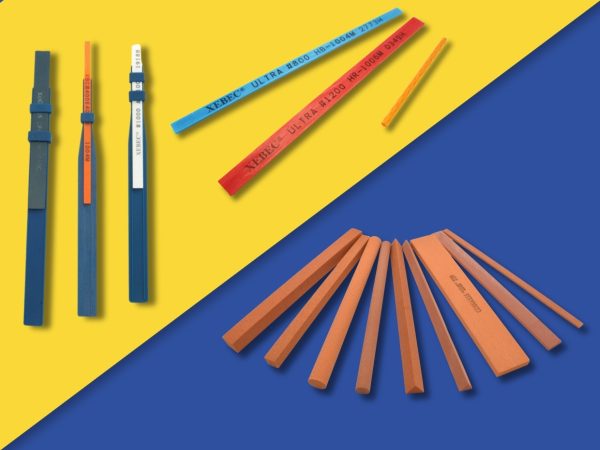
Ceramic Files vs Polishing Stones for Mould Tool Finishing (Part 2)
In the previous article, we explored the mould polishing fundamentals, including scratch control and abrasive progression. For a complete overview of the full polishing workflow, [...]
Read more...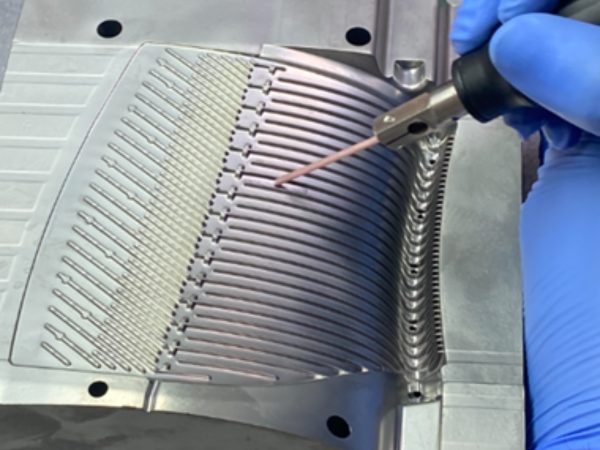
The Fundamentals of Professional Mould Tool Polishing (Part 1)
Mould tool polishing is not simply about making steel shiny. For professional toolmakers and manufacturers, polishing is a process of controlled material removal, where surface [...]
Read more...
What is Magnetic Finishing? A Complete Guide to the Process, Benefits, and Applications
Magnetic finishing (also known as magnetic polishing or magnetic deburring) is a wet finishing process that uses a rotating magnetic field to drive stainless steel [...]
Read more...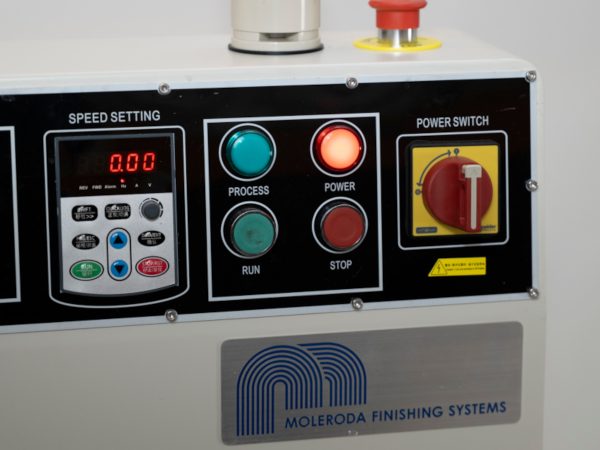
MagForce Magnetic Finishing System: Implementing Magnetic Finishing in Production
🔗 What is magnetic finishing? Automated mass-finishing explained A complete magnetic finishing system is typically the right solution when These are the scenarios where magnetic [...]
Read more...
Mass Finishing Liquid Compounds Compared – FC115 vs FC120 vs MagForce (FC630AL)
Mass finishing is an industrial surface finishing method where many parts are processed together with media and a fluid compound. It automates deburring, polishing, cleaning [...]
Read more...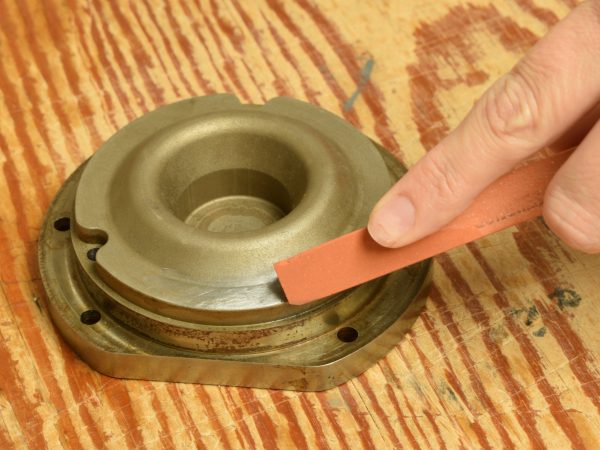
How to Get Perfect EDM Finishes with Polishing Stones
EDM uses controlled sparks to erode metal, which leaves behind: A hard, oxidized layer Micro-burrs and surface irregularities A rough texture that’s difficult to remove [...]
Read more...
Discover Vibratory Finishing: Efficient, Precise, and Production-Ready
If you’re seeking a surface-finishing method that’s efficient, repeatable, and gentle enough for complex geometries, vibratory finishing with vibratory bowls and media might just be [...]
Read more...
Rubber vs Ceramic Diamond Polishing Wheels: A Complete Guide to Choosing the Right Tool
Choosing between Rubber Diamond Polishing Wheels and Ceramic Diamond Polishing Wheels depends on whether you need flawless surface finishing or high-efficiency material removal. At Moleroda, [...]
Read more...
ENESKA Postprocess System: Safer, Smarter Post-Processing for 3D Printed Parts
In modern manufacturing, 3D printing has revolutionized production. But after printing, parts often need post-processing—a step that can involve hazardous dust, reactive metals, and potential [...]
Read more...
The Complete Guide to Laser Welding for Jewellers & Precision Workshops
Laser welding has revolutionised the way jewellers, goldsmiths, dental technicians, and precision engineers work. Whether you’re repairing delicate jewellery, adjusting dental frameworks, or fixing eyewear, [...]
Read more...
DaDo 2.0 Laser Welder: Why It’s the Upgrade You Need
Laser welding has transformed jewellery repair, dental work, and precision engineering. The original DaDo Laser Welder 1.0 introduced a compact, affordable way to harness laser [...]
Read more...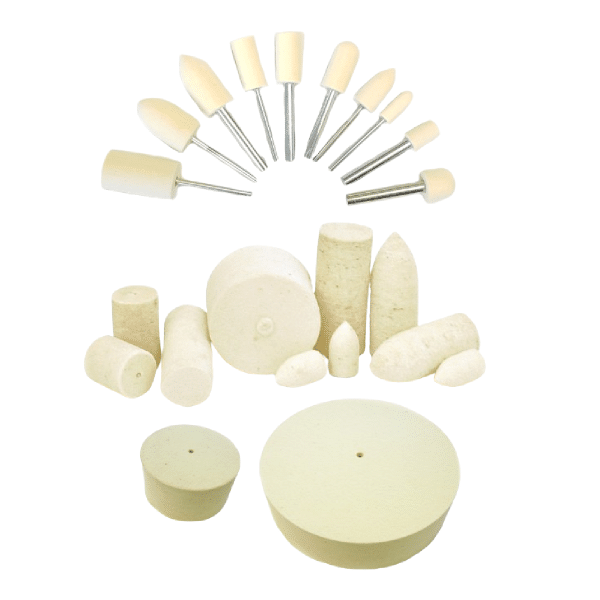
A Guide to Choosing the Right Felt Grade and Density for Polishing
Selecting the correct felt grade and density is essential for achieving the desired surface finish during polishing. The hardness and density of felt determine its [...]
Read more...
Abrasive Nylon vs Wire Brushes: Which Is Better for Internal Bore Finishing?
Wire brushes can be useful for general cleaning, rust removal, scale removal and more aggressive surface preparation. Abrasive nylon is often better suited where controlled [...]
Read more...
Moleroda Video Guides
Featured Video Guides
The RODA Range
3D Print Finishing
Corian Worktop Repair
RODA Vortex Point in action
Vibratory bowl – which media should I use?