

Deburring small drilled holes is usually straightforward when the burr is visible and accessible. The challenge becomes much harder when the burr is left on the inside of a tube, bore or curved section where normal deburring tools cannot reach.
This is a common issue in precision engineering, fabrication, medical components, fluid systems and small-bore tubular parts. A hole may be drilled from the outside of the component, but the burr forms on the internal edge. If the tube has already been bent, formed or assembled, access through the bore can be restricted, curved or too small for a conventional tool.
In these situations, the best deburring method depends on the material, burr size, hole size, bore access and level of edge control required. In some cases, a brush or dedicated cross-hole deburring tool will be the best option. In others, a flexible abrasive such as Mitchell’s Abrasive Cord & Tape may be a more practical solution.
Why Small Internal Holes Are Difficult to Deburr
Internal burrs are difficult because the burr is often hidden on the far side of the drilled hole. The outside of the hole may look clean, but the internal edge can still have a burr, sharp edge or raised material inside the tube.
The problem becomes more complicated when the tube is curved or already formed. A straight tool may not be able to reach the internal burr. A brush may not apply enough contact pressure. A mounted abrasive may be too large. Blasting may clean the area but not reliably remove the burr.
The main challenges are usually:
- Restricted access through the bore or tube
- Small drilled holes with limited tool clearance
- Internal burrs that cannot be reached from the outside
- Curved or formed geometry that prevents straight-line access
- Harder materials such as stainless steel leaving tougher burrs
- Difficulty inspecting the internal edge after deburring
Before Choosing an Internal Deburring Method
Before selecting a tool, it is worth understanding where the burr is and how it can be reached. The correct method for a straight drilled cross-hole may not be the same as the correct method for a small hole inside curved tube.
Key questions to ask include:
- Is the burr on the outside edge, inside edge or both?
- Can the burr be reached directly through the drilled hole?
- Can a tool pass through the bore or tube?
- Is the tube straight, curved, bent or already assembled?
- Is the material soft, hard, stainless or work-hardening?
- Does the part need a controlled chamfer, or is light burr removal enough?
- Can the internal area be cleaned and inspected afterwards?
Once these points are understood, it becomes much easier to choose between brushes, cross-hole deburring tools, abrasive cord, tube brushes, blasting or a change to the manufacturing sequence.
Common Methods for Deburring Holes Inside Tube
There is no single best method for every internal deburring problem. The right option depends on the material, burr size, hole size, bore access, component shape and level of edge control required. The methods below all have a place, but each has limitations when working with small holes inside curved or restricted tube.

Internal Deburring Brushes
Brush-based deburring tools are useful when the hole or bore is accessible and the brush can make consistent contact with the internal edge or surface being worked.
Best for:
Light deburring, bore cleaning, internal edge blending and general finishing inside accessible holes and bores.
Limitation:
Less suitable for heavy burrs, harder materials or curved tubes where the brush cannot reach the burr with enough pressure.
Typical options:
Twisted-in-wire Cross-hole Deburring Brushes are useful for smaller holes and edge-focused work.
Abrasive Nylon Tube Brushes are often better for internal surface cleaning and bore finishing.
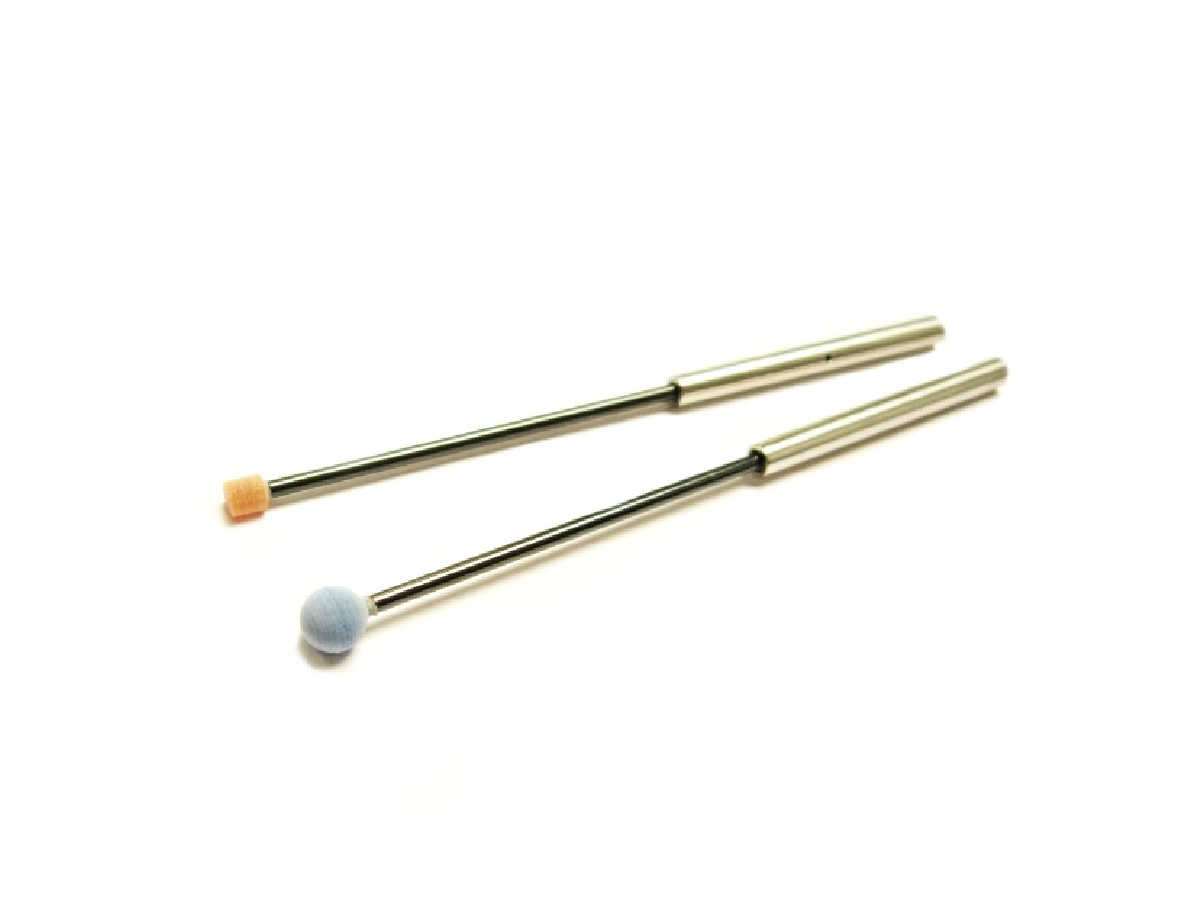
Dedicated Cross-Hole Deburring Tools
Dedicated cross-hole tools are useful where tool access is possible and a more controlled cross-hole or back-burr deburring process is required.
Best for:
Controlled internal edge breaking, cross-hole deburring and applications where a consistent chamfer or burr removal process is needed.
Limitation:
The tool still needs suitable access. If the component has already been bent or formed, the internal path may be too restricted for a rigid tool.
Related Guide:
How to Deburr Internal Holes with XEBEC Tools
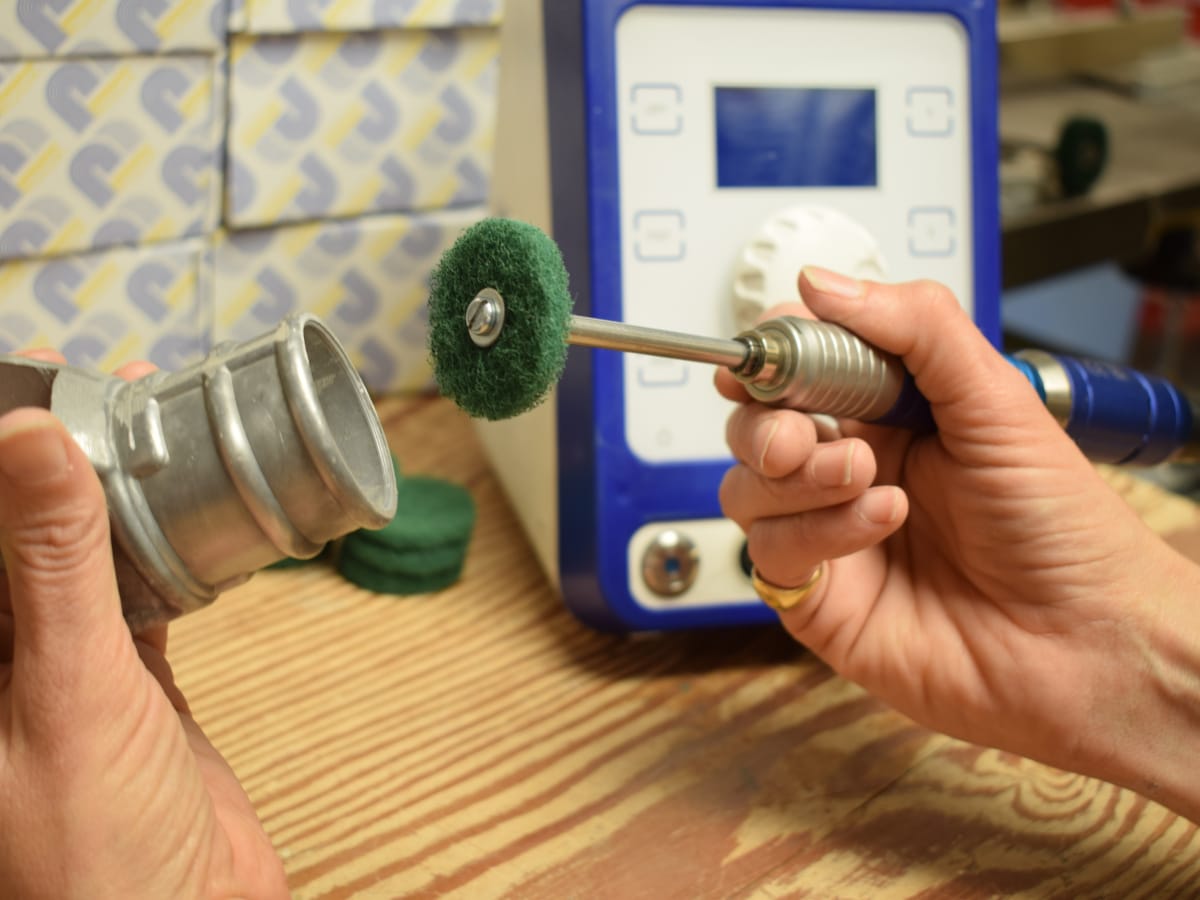
RODA Bore Abrasive Nylon Tools
RODA Bore tools are designed for long-reach internal bore deburring, cleaning and surface refinement where an abrasive nylon tool can be inserted and controlled.
Best for:
Accessible bores, ports, holes and internal features where long-reach abrasive nylon contact is useful.
Limitation:
Less suitable where the tube is too small, tightly curved or restricted for a mounted abrasive tool or mandrel-based system.
Related Guide:
Complete guide to internal bore deburring with RODA Bore

Shot Blasting
Shot blasting or abrasive blasting can be useful for cleaning, texturing and treating accessible surfaces. In some cases, it may help reduce very light burrs or loose material.
Best for:
Surface cleaning, texture control, scale removal and treating accessible external or internal surfaces.
Limitation:
Not always reliable for removing hidden burrs inside small holes or curved tube because the media must reach the burr at the correct angle and force.

Abrasive Cord or Abrasive String
Abrasive cord, also called abrasive string or abrasive thread, is useful where access is the main challenge and the abrasive needs to be fed, pulled, wrapped or tensioned through a difficult internal feature.
Best for:
Small holes, grooves, threads, slots, curved internal passages and awkward recessed areas where rigid tools cannot easily reach.
Limitation:
Not ideal for heavy stock removal or applications that require a precise machined chamfer or tightly controlled radius.
Why Abrasive Cord Can Be Useful for Curved Tube
If the tube is already bent or formed, the burr may be difficult to reach with a straight shank tool, mounted abrasive or brush. Abrasive cord is often worth testing in these situations because it can be fed through, wrapped around, tensioned or pulled across the internal edge instead of relying on direct straight-line access.
Using Abrasive Cord for Difficult-Access Internal Deburring
When a small drilled hole leaves a burr on the inside of a curved or restricted tube, the main challenge is often access rather than cutting action. A rigid tool, mounted abrasive or brush may work well in a straight, open bore, but may struggle if it cannot reach the internal edge or apply consistent contact pressure.
Abrasive cord, also known as abrasive string or abrasive thread, can be useful because it does not rely on direct straight-line access. Instead, the cord can be fed through, pulled, wrapped, tensioned or worked across the internal feature to create controlled abrasive contact in areas that are difficult to reach with conventional tools.
When Abrasive Cord Is Worth Testing
Abrasive cord is usually worth considering when the burr or edge can be reached by a flexible abrasive, but not easily by a rigid deburring tool, file, mounted point or brush.
- The burr is on the internal edge of a small drilled hole
- The tube, bore or passage is curved, formed or difficult to access
- A straight shank tool cannot reach the burr directly
- A brush is too soft, too large or cannot apply enough contact pressure
- The application requires light deburring, cleaning, blending or polishing
- The abrasive needs to be fed through, wrapped around, tensioned or pulled across the feature
Abrasive cord is not always the right choice for heavy stock removal, high-volume automated deburring or applications that require a precise machined chamfer. In those cases, a dedicated deburring tool, machining operation or process change may be more suitable.
How Abrasive Cord Can Be Used
The exact process will depend on the component, but a typical test method is to select a cord size that can pass through the feature, feed it through the bore or hole, apply controlled tension, then work the cord against the internal edge until the burr is reduced or removed.
- Choose a cord size that can pass through the hole, bore or internal feature.
- Select an abrasive type based on the material and burr condition.
- Feed the cord through or around the feature being deburred.
- Apply controlled tension so the abrasive contacts the internal edge.
- Work the cord back and forth until the burr is removed or blended.
- Inspect the internal edge and adjust the cord size, abrasive type or method if required.
- Clean the component to remove any abrasive residue or loose debris.
Mitchell’s abrasive cord is most commonly used by hand, but it can also be adapted carefully for selected controlled applications. For example, the cord can be looped, twisted and held in a drill chuck, or cut into short sections for use in a jeweller’s saw frame when working through slots, holes or fine details.
When adapting abrasive cord for drill use, always test the method carefully. Avoid excessive speed, pressure or tension, and make sure the cord is securely held before use. Suitable PPE and safe working practices should always be followed.
Choosing a Starting Specification
The cord needs to be small enough to pass through the hole, groove or internal feature, but large enough to make useful abrasive contact. If the cord is too fine, it may not contact the burr effectively. If it is too large, it may be difficult to feed through the part or may jam inside the feature.
For stainless steel or harder materials, Silicon Carbide is often a good starting point because it provides a sharper cutting action. For general-purpose deburring and finishing, Aluminium Oxide may be suitable. For finer polishing, cleaning or refining work, Crocus may be preferred depending on the application.
For the full cord, tape, size and abrasive type range, see Mitchell’s Abrasive Cord & Tape.
Need Help with an Internal Deburring Problem?
If you are trying to remove burrs from small holes, curved tube, internal bores, slots, grooves or difficult-access features, the best method will depend on your component geometry and material.
Send us the material, hole size, bore size, access details and any drawings or photos you can share. We can help suggest whether abrasive cord, brushes, XEBEC tools, RODA Bore or another finishing method is most likely to work.