Call us to find out the current price for this product

Precision Welding
Electro Wand EW Combi Electrolytic Stainless Steel Weld Cleaner
Call us to find out the current price for this product

Finishing Chemicals, Lubricants & Cleaners
Electro Wand Weld Cleaning Electrolyte – Phosphoric Acid, 5 Litres
£165.88 incl VAT
Choose by the length and type of weld, the size of the parts, and how much hazardous chemistry your workplace can handle.
| Method | How It Works | Handling | Choose It For |
|---|---|---|---|
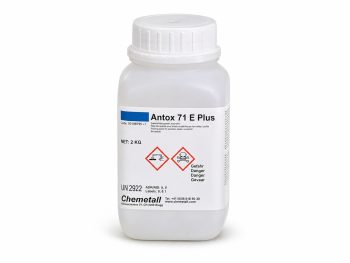
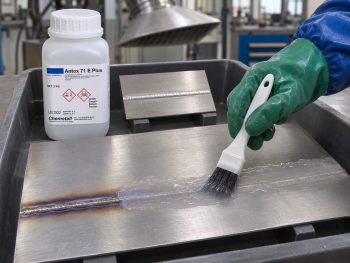
| Pickling paste (Antox 71E Plus) | A nitric and hydrofluoric acid paste is brushed on, left to react, neutralised and rinsed off | Highly hazardous; specialist carriage; neutralise before discharge | Long weld runs, heavy heat tint, MIG and TIG welds, large or awkward fabrications |
| Electrolytic cleaning (Electro Wand EW Combi) | A low-voltage current and a phosphoric acid electrolyte remove the tint as a brush or paddle passes over the weld | Corrosive electrolyte, but no hydrofluoric or nitric acid | TIG welds on sheet and fabrications where the surrounding finish must stay unmarked |
The Electro Wand runs on its own phosphoric acid electrolyte, available in 5 litre refills. Antox pickling paste is neutralised with Antox NP and can be followed by a passivator such as Antox 90E; the full Antox range is supplied on request.
For a fuller comparison, read Pickling Paste vs Electrolytic Weld Cleaning for Stainless Steel.
Pickling vs Passivation
Pickling removes the discoloured, chromium-depleted layer left by welding. Passivation helps the protective passive layer re-form afterwards. Both pickling paste and electrolytic cleaning start that process; add a separate passivation stage where a specification or hygiene standard requires it.
Need Help Choosing a Weld Cleaning Method?
Contact Moleroda with the material and grade, the weld type and length, the size of the parts and any finish or hygiene specification.
Frequently Asked Questions (FAQs)
Why do stainless steel welds need cleaning?
Welding leaves heat tint and a chromium-depleted oxide layer that corrodes before the surrounding steel. Cleaning removes it so the weld keeps the corrosion resistance of the parent metal.
Which is faster, pickling paste or electrolytic cleaning?
Pickling paste treats long weld runs and heavy discolouration in one application but needs time to react, neutralising and rinsing. Electrolytic cleaning works as you go and suits TIG welds where you can follow the seam with the brush or paddle.
Is electrolytic weld cleaning acid-free?
No. It avoids hydrofluoric and nitric acid, but the electrolyte is a corrosive phosphoric acid solution. Wear gloves and eye protection and follow its safety data sheet.
Why is Antox pickling paste price on application?
It contains nitric and hydrofluoric acid and must travel by specialist dangerous goods carriage. Moleroda quotes the product and carriage together for each order.
Can I mix products from different weld cleaning systems?
No. Use the Antox neutraliser and passivators with Antox pickling paste, and the Electro Wand electrolyte with the EW Combi.