

When it comes to achieving a flawless surface finish, grit size matters — but comparing Micro-Mesh to standard sandpaper can be confusing. Traditional abrasives use fixed mineral grains measured in FEPA (European) or CAMI (US) grit numbers, while Micro-Mesh uses its own grading system based on micron size and performance.
This guide explains exactly how Micro-Mesh grades relate to conventional abrasives, how to choose between the four Micro-Mesh types (Regular, MX, AO, and MXD), and which is best suited to your application.
For a full overview of the Micro-Mesh abrasive system — including all available grades and product formats — visit our main Micro-Mesh category page.
Standard sandpapers are built around rigid grit bonded to paper. They cut aggressively and wear quickly, leaving deep scratches that must be polished out later.
Micro-Mesh, by contrast, is built for precision. Each abrasive crystal is embedded in a flexible latex layer on a durable cloth backing. This allows the crystals to move and cut evenly, producing a consistent scratch pattern that can be refined through progressively finer grades — right down to a mirror-smooth 1 micron finish (equivalent to FEPA 8000–12000).
In short:
-
Traditional sandpaper cuts fast but leaves scratches.
-
Micro-Mesh cuts cleanly, lasts longer, and creates a refined, uniform finish.
Micro-Mesh grades don’t directly match sandpaper grit numbers, but they do correspond roughly by performance. The table below shows approximate equivalents between Micro-Mesh, FEPA (European grit), and Micron size.
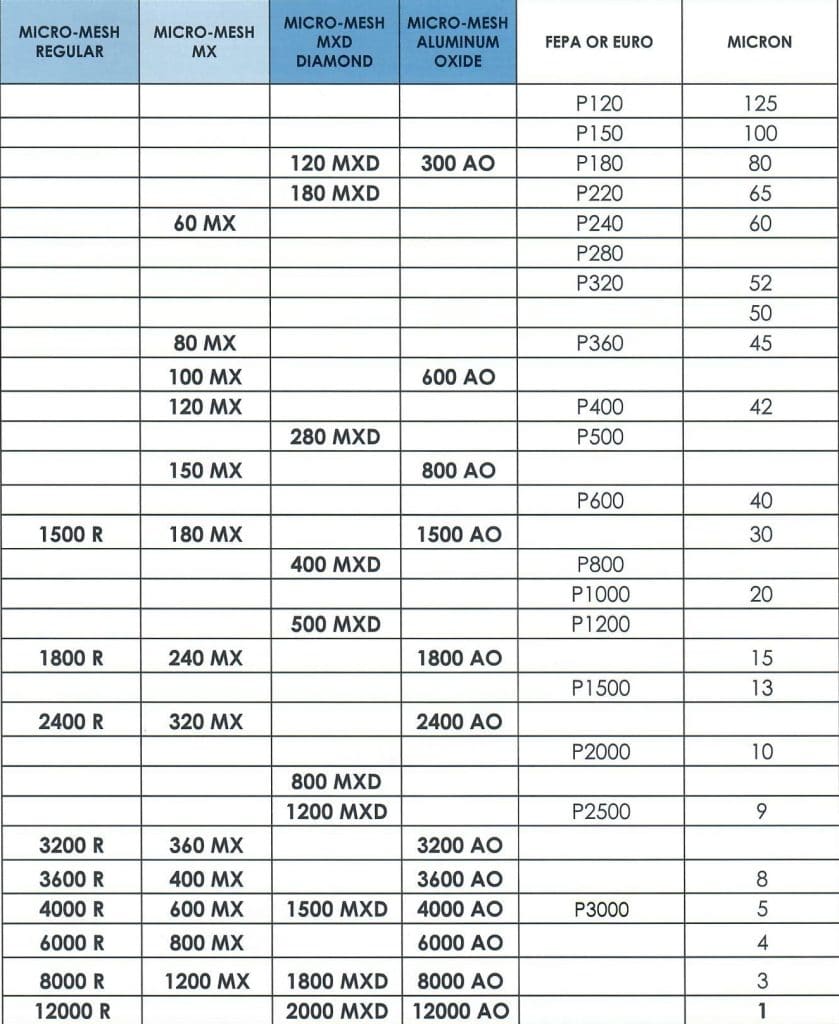
Tip: Move through grits progressively to avoid swirl marks or uneven surfaces.
Each Micro-Mesh variant uses the same core technology but is engineered for different materials and results. Here’s how they compare:
Micro-Mesh Regular (Silicon Carbide)
-
Grades: 1500 to 12000
-
Cut Type: Gentle, flexible
-
Best For: Plastics, paints, coatings, varnishes, soft metals, and wood.
-
Key Feature: The standard for Micro-Mesh performance. Produces a smooth, flat surface — ideal for transparent or glossy finishes.
Try: Micro-Mesh Regular Sheets or Hand Polishing Kits
Micro-Mesh MX (Silicon Carbide)
-
Grades: 60MX to 1200MX (approx. P240 to P8000 equivalent)
-
Cut Type: Faster, slightly firmer
-
Best For: Metals, hardwoods, and durable coatings.
-
Key Feature: Delivers a fast, clean cut on hard materials while maintaining a refined finish.
Ideal for: Engineering, toolmaking, precision metalwork, and hardwood polishing.
Micro-Mesh AO (Aluminium Oxide)
-
Grades: 300AO to 12000AO
-
Cut Type: Consistent and non-contaminating
-
Best For: Aluminium, composites, solid surface countertops (like Corian), and aircraft leading edges.
-
Key Feature: Leaves a bright, corrosion-free surface — perfect for non-ferrous metals.
Popular choice in: Aerospace and solid-surface finishing industries.
Micro-Mesh MXD (Diamond)
-
Grades: 120MXD to 2000MXD (80–1 micron)
-
Cut Type: Extremely fine yet durable
-
Best For: Ceramics, carbide, glass, stone, and hardened alloys.
-
Key Feature: Diamond abrasive for maximum life and minimal material removal — precise finishing for critical surfaces.
For ultra-hard materials, explore: Micro-Mesh Diamond Sheets & Discs
| Material | Recommended Type | Typical Grit Range | Finish Level |
|---|---|---|---|
| Soft woods & varnish | Regular | 2400–12000 | High gloss |
| Hardwoods & metals | MX | 60MX–1200MX | Fine to mirror |
| Aluminium & composites | AO | 300AO–12000AO | Bright polish |
| Ceramics & hard alloys | MXD | 120MXD–2000MXD | Precision finish |
Now that you’ve identified the correct Micro-Mesh type and grade equivalents, you can explore the complete range of Micro-Mesh sheets, discs, belts and finishing kits available here to select the right format for your application.
Understanding grit equivalence ensures you can integrate Micro-Mesh seamlessly into your workflow. Whether you’re replacing a traditional sandpaper system or refining a professional polishing process, Micro-Mesh offers the same (or finer) levels of finish with longer life and far greater control.
Still unsure? Check out our guides on Smoothing and Finishing Wood with Micro-Mesh or How Violin Makers Use Micro-Mesh for real-world examples.
Moleroda Finishing Systems is a leading UK supplier of genuine Micro-Mesh abrasives, including sheets, pads, discs, belts, rolls and polishing kits. Whatever your surface — from wood to metal or acrylic — we’ll help you find the right product to achieve a perfect finish.

Emery Files
Abrasive Hand Pads
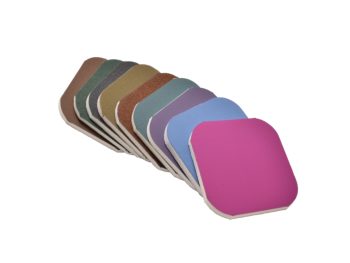
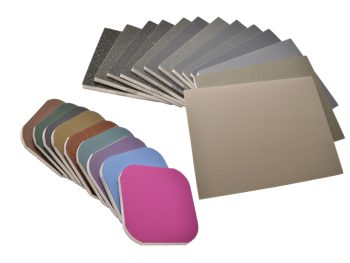
Micro-Mesh Pads (Soft Touch) – Cushioned Abrasive – Regular, MX (Individual Pads & Sets)
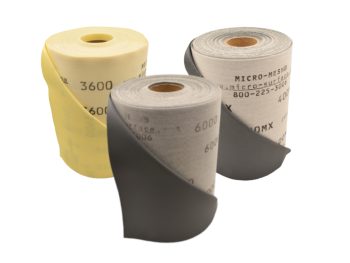

Why Micro-Mesh is Known as the “Wonder Abrasive”
Micro-Mesh has earned its reputation as the “wonder abrasive” through decades of professional use across [...]
May

Smoothing & Finishing Wood with Micro-Mesh
Do you have a wooden sculpture that needs finessing? Do you have a kitchen surface [...]
Apr

How Violin Makers Use Micro-Mesh
How to polish violins and repair and restore using Micromesh abrasives. Approved for use on [...]
Oct
Polishing & Finishing Solid Surface Worktops with Micro-Mesh
Moleroda stocks a range of cushioned finishing abrasives, available in formats useful for both industrial [...]
Jul