


Abrasive Hand Tools
Micro-Mesh Acrylic Headlight Lens Restore Kit | Restore Clarity by Hand
£36.32 incl VAT

Abrasive Hand Tools
Micro-Mesh Burn Kit for removal of marks and scratches from Marble and Acrylic
£52.63 incl VAT

Sale!
Drill Polishing Kits
Original price was: £161.98.£127.18Current price is: £127.18. incl VAT


Abrasive Hand Tools
Micro-Mesh Craft kit for polishing Plastic, Acrylic, Porcelain, Fiberglass and much more..
£24.20 incl VAT



Abrasive Hand Tools
Micro-Mesh kit for Acrylic and Polycarbonate restoral Military and Defence approved KR-70
£52.72 incl VAT

Drill Polishing Kits
Micro-Mesh Light Damage Removal Kit – Plexiglass & Aircraft Transparencies
£208.40 incl VAT

Drill Polishing Kits
Micro-Mesh Maintenance Kit for Cordless Drill – Restore Acrylic Clarity with Ease
£159.06 incl VAT

Abrasive Hand Tools
Micro-Mesh Plastic Surface restoration kit – Hobby Kit for plastic / wood / metal
£31.55 incl VAT


Abrasive Hand Tools
Micro-Mesh Scratch-Away Sink & Stainless Steel Restore Kit – Professional DIY Surface Repair
£23.54 incl VAT


Abrasive Hand Tools
Solid Surface Corian Repair kit – Kitchen and bathroom countertop scratch and burn removal kit
£21.43 incl VAT
Micro-Mesh kits range from compact hand-finishing sets to larger restoration systems intended for use with a drill or random orbital sander. The best choice depends on four factors:
- The surface material – such as acrylic, polycarbonate, metal, hardwood, clear coat or solid surface.
- The type and depth of damage – from dullness and light haze to scratches, scuffs, oxidation or deeper surface defects.
- The size and shape of the workpiece – small shaped components may be easier to finish by hand, while larger flat panels can benefit from a powered system.
- The intended tool – some kits are for hand use, while others require a particular drill, polisher or random orbital sander.
Micro-Mesh is a progressive finishing system. Where abrasive stages are included, each grade refines the scratch pattern left by the previous stage until the required surface quality, gloss or optical clarity is achieved. Selecting the correct starting point and completing the specified sequence are therefore more important than simply choosing the kit containing the greatest number of grades.
Micro-Mesh Kit Selection guide
General Craft and Small Components
Suitable starting points:
Versatile hand kits for model making, pen turning, restoration and small-area finishing across the materials specified on each product page.
Acrylic and Plastic Restoration by Hand
Suitable starting points:
- Micro-Mesh KR-70 Restoral Kit
- Micro-Mesh NC-78-1 Restoral and Finishing Kit
- Micro-Mesh Acrylic Hand Polishing Kit
For controlled hand restoration of acrylic, plastic panels and transparencies. Compare the stated material suitability, working area and included grade sequence.
Headlights, Landing Lights and Small Curved Lenses
Suitable starting points:
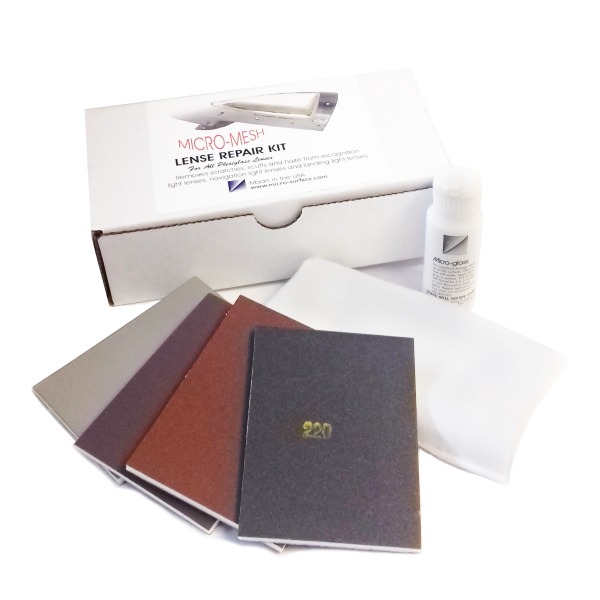
Application-specific kits for localised lens and transparency restoration. Confirm whether the lens is acrylic, polycarbonate or coated before beginning.
Very Light Haze and Routine Acrylic Maintenance
Suitable starting point:
For very minor topical scratching, haze and regular maintenance where a coarse abrasive sequence is not required.
Light Acrylic Damage over Larger Areas
Suitable starting points:
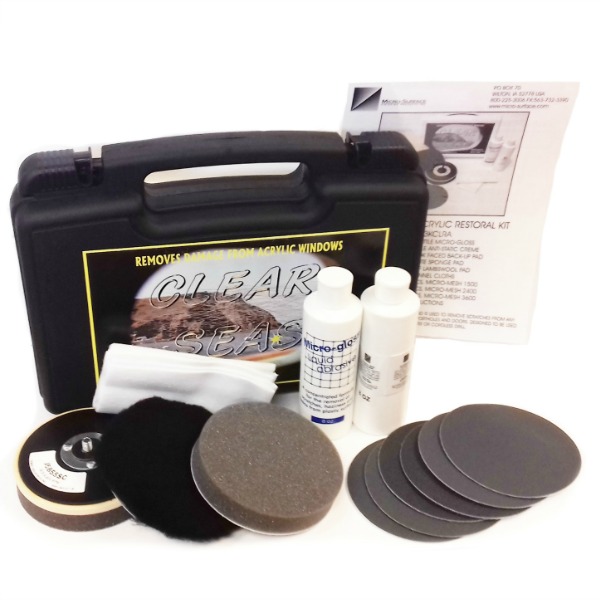
Powered systems for minor scratches, scuffs and haze on larger acrylic surfaces. The Clear Seas kit is configured for marine acrylic hatches, windows and similar panels.
Deep Damage on Acrylic Surfaces
Suitable starting point:
A machine-assisted system for deeper scratches, gouges and crazing on suitable acrylic surfaces. It is not a general-purpose kit for every transparent plastic.
General Metal Polishing
Suitable starting point:
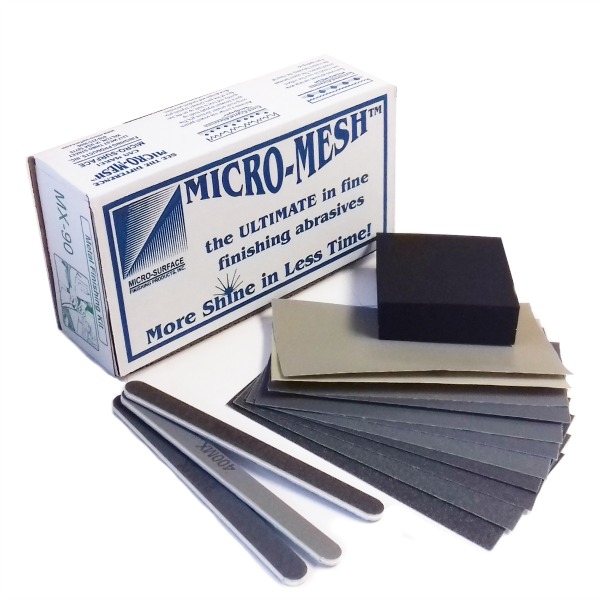
Uses the firmer Micro-Mesh MX system for progressive hand finishing of suitable metals, including stainless steel, aluminium, brass and copper.
Stainless Steel Sinks and Domestic Surfaces
Suitable starting point:
For restoring a more uniform finish where utensils, cookware or cleaning products have left surface scratches and inconsistent marking.
Bare Aluminium Leading Edges
Suitable starting point:
A dedicated powered system for unpainted aluminium leading edges and related components. It should not be treated as a universal metal-polishing kit.
Bare and Finished Wood
Suitable starting point:
For refining bare wood, rubbing down finished surfaces and matching matt, satin or high-gloss finishes without relying on steel wool, pumice or rottenstone.
Clear Coat and Painted Finishes
Suitable starting point:
For superficial defects contained within the clear coat. Damage that has penetrated the colour coat, primer or substrate requires repair before polishing.
Solid-Surface Worktops and Specialist Repairs
Suitable starting points:
Choose the dedicated kit for the exact substrate and defect. A kit described for acrylic or solid surface should not automatically be assumed suitable for mineral glass, stone or coated glass.
Choosing Between Maintenance, Light-Damage and Heavy-Damage Kits
Maintenance and very minor surface damage
Choose a maintenance kit for light haze, loss of clarity and very fine topical marking. These systems normally rely on polishing pads and liquid abrasives rather than beginning with a coarse damage-removal stage.
Light scratches and scuffs
A light-damage kit introduces a controlled Micro-Mesh abrasive sequence before the final polishing stages. Hand kits are well suited to smaller areas and shaped components, while drill or orbital systems can provide greater consistency across larger panels.
Deeper scratches, gouges and crazing
Heavy-damage restoration requires more material removal to reach the bottom of the defect before the surface can be progressively refined. Confirm that the kit is approved for the particular material and that the remaining component thickness, optical requirements and service limits allow abrasive restoration.
Abrasive polishing cannot repair structural cracks, damage extending through the material or defects outside the component’s permitted repair limits.
Safety-critical components, aircraft transparencies and coated optical surfaces must be assessed and processed in accordance with the applicable manufacturer or maintenance instructions.
Understanding Micro-Mesh Regular, MX and AO
Different Micro-Mesh systems use different abrasive constructions and grade ranges. The numbers should not be treated as directly interchangeable with conventional sandpaper or with one another.
- Micro-Mesh Regular is commonly used for acrylic, plastic, polycarbonate, fibreglass, gelcoat, coatings and many wood-finishing processes.
- Micro-Mesh MX uses a firmer construction suited to harder surfaces, particularly metals, and is also used for selected hardwood applications.
- Micro-Mesh AO uses aluminium oxide and is intended for applications including aluminium and solid-surface materials such as Corian.
Application-specific kits may use a particular series or combination of products to produce the intended result. Always follow the sequence supplied with the selected kit instead of substituting grades solely because their numbers appear similar.
Why Choose a Complete Micro-Mesh Kit?
- Matched abrasive stages for a defined material or repair process.
- A structured progression from defect removal through to final refinement.
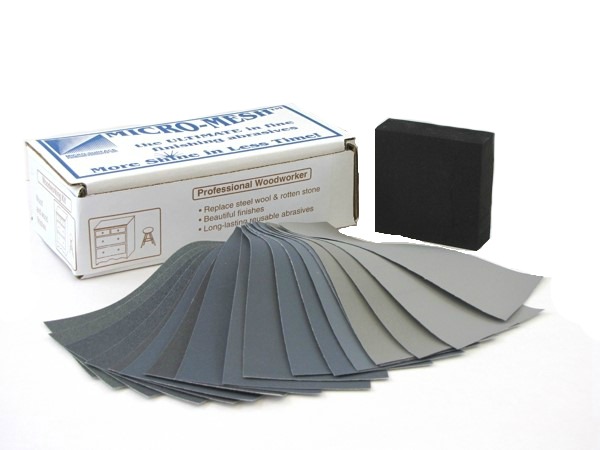
- Appropriate supporting products, which may include foam blocks, backing pads, polishing pads, cloths and liquid abrasives.
- Clearer control over the required surface finish than using unrelated abrasive grades.
- Hand and powered options for different workpiece sizes and production requirements.
Kit contents vary. The required drill, sander or polisher is normally not supplied, and some kits may require a compatible backing pad or other attachment. Check the individual product page before ordering.
Getting the Best Results from Micro-Mesh
- Identify the substrate accurately. Acrylic, polycarbonate, coated plastic, mineral glass, metal and solid-surface materials require different processes.
- Assess the damage. Establish whether the problem is haze, surface scratching, oxidation, coating damage or a deeper defect.
- Clean the workpiece before starting. Loose dirt and contamination can introduce additional scratches during polishing.
- Test an inconspicuous area. This is especially important on coated, painted, plated or previously repaired surfaces.
- Follow the supplied sequence. Use the specified lubricant and complete each abrasive stage before moving to the next.
- Keep products and surfaces clean between stages. Contamination from a coarser grade can compromise the finer finish.
- Use only the specified tool and attachment. Powered kits are not automatically compatible with every drill, grinder, sander or polisher.
- Inspect the surface regularly. Stop once the required finish has been achieved and avoid unnecessary material removal.
Need Help Selecting a Kit?
If you are unsure which system is appropriate, contact Moleroda’s finishing specialists with details of the material, surface condition, workpiece size and intended tool. Photographs of the damage can also help us identify the most appropriate starting point.
You can also explore the complete Micro-Mesh range for individual sheets, discs, pads, rolls, files, belts, accessories and polishing liquids.