
Post-processing 3D printed parts is a critical step in additive manufacturing. It improves the strength, appearance, and precision of printed components while ensuring they meet industry standards. However, this process comes with safety risks and technical challenges that manufacturers can’t afford to ignore.
In this guide, we explain the dangers of post-processing, outline best practices for safety, and show you why the ENESKA Post Processor is the ideal solution for safe, efficient 3D printing finishing.

Post-processing refers to the finishing techniques applied to 3D printed parts after they come off the printer. Common steps include:
-
Removing support structures
-
Deburring and smoothing edges
-
Polishing and surface finishing
-
Heat treating or coating for improved durability
These steps are essential for functional prototypes, medical devices, aerospace components, and industrial parts where precision and safety are critical.

While essential, post-processing can be hazardous if not performed safely. Here are the main risks:
1) Chemical Exposure
Processes like sanding, polishing, and painting may involve toxic solvents or resins. Without proper safety precautions, such as extraction or PPE, workers risk respiratory problems and skin irritation.
2) Combustion
Materials like titanium and aluminium are highly reactive and can result in combustion, posing a huge safety risk to users. However, many alloys also have references to minimum ignition energy of less than one mJ in their data sheets and pose just as much risk.
3) Fire Hazard
Techniques such as annealing or heat treating generate extreme temperatures, which can lead to fire hazards if not done handled properly. Additionally, some chemicals used in post-processing can be flammable and can cause fire if exposed to heat or sparks.
4) Environmental Hazards
Post-processing can generate waste materials or emissions containing invisible airborne dust particles that pose risks not only to human health but also to environmental safety if not filtered and disposed of correctly.
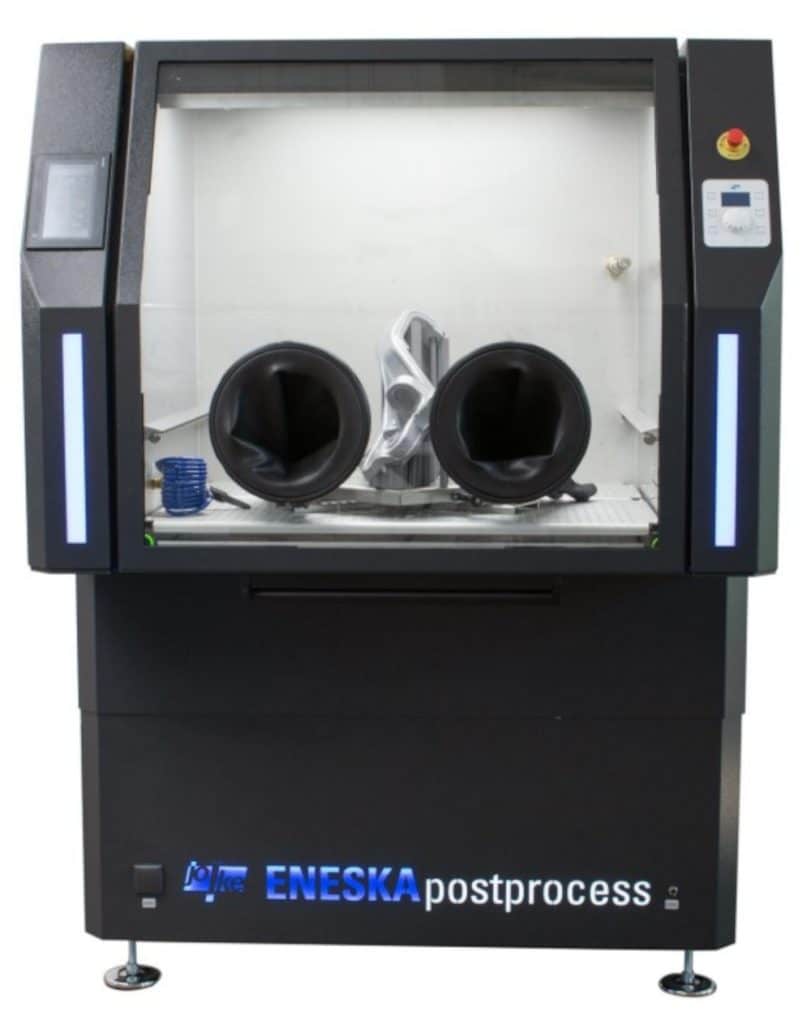
The ENESKA Post Processor offers a fully enclosed, explosion-protected system designed to handle every stage of 3D printing post-processing safely and efficiently.
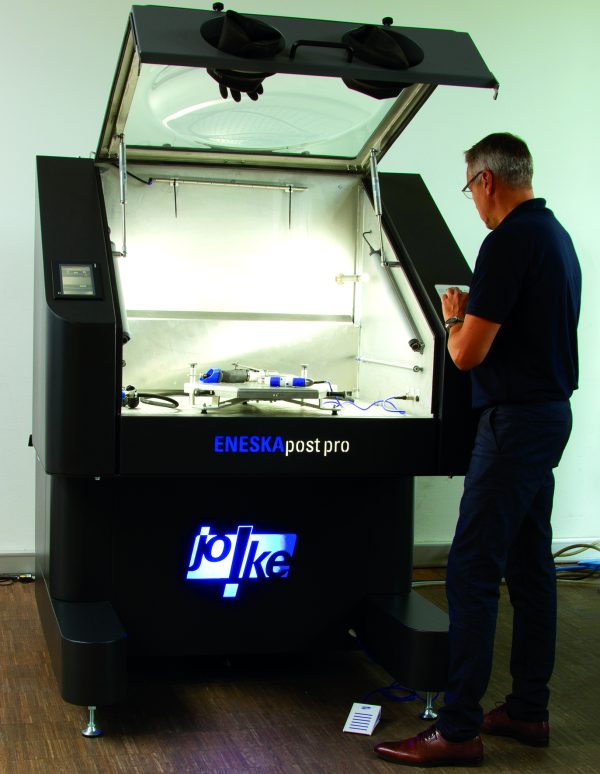

Safety & Lighting
ENESKA Postprocess System | Safe & Efficient 3D Printing Post-Processing
Key Advantages
-
High Safety Standards: Fully enclosed design with advanced filtration
-
No Explosion or Deflagration Risk: The FSK automatic fine dust measuring system continuously monitors airborne particles, while ATEX-rated dust extraction and grounding eliminate spark discharge risks—ensuring the chamber only opens when air quality is confirmed safe at 99.995% air purity (purer than the air we breath).
-
No Protective Clothing Required: Operator-friendly glove-box design
-
Ergonomic & Simple Operation: Adjustable working height and easy access tools
-
Multi-Tool Connectivity: Supports pneumatic and electric tools simultaneously
For more insights, watch our ENESKA Postprocess System in action and see how it transforms 3D post-processing safety and efficiency.
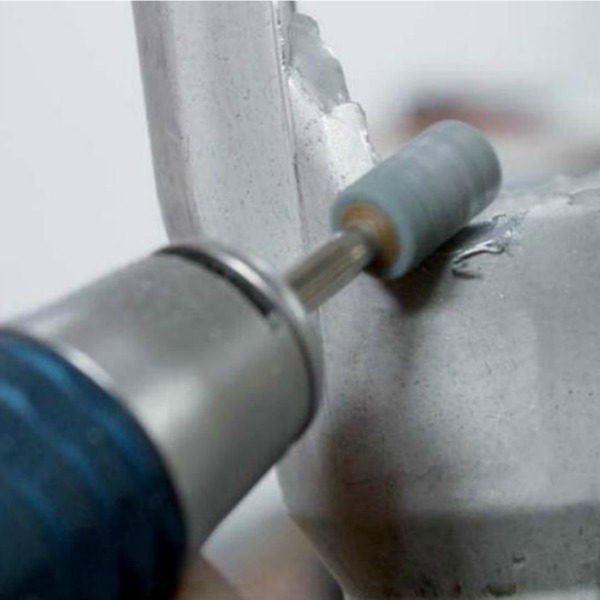

Electric tools


Electric tools

With the ENESKA system, you can perform:
-
Residual powder removal
-
Support structure removal
-
Substrate separation
-
Deburring
-
Coarse and fine surface finishing
-
Final polishing and inspection
All of this is done in a sealed, dust-free environment with automated filtration and moisture separation options for reactive materials.

-
Stainless steel
-
Aluminium
-
Titanium
-
Carbon
-
Inconel
-
Brass
-
Ceramic
-
PEEK
-
POM
-
Plastics
-
Rubber-like materials
-
Gypsum
-
And many more…

Health Protection
The respirable dusts released during post-processing are blamed for cancer and cardiovascular diseases, among other things. For this reason, the ENESKApostpro is completely enclosed and sealed. It has appropriate and safe extraction and filtering equipment. No dust can escape from its working area. Before the system can be opened, there is an after-suction phase and a special cleaning process – only then does the system unlock and the finished workpiece can be removed. The system complies with important legal regulations on dust control, such as that dust must be directly removed at the point of exit.
Reduced Risk of Explosion
No more risks of explosions – The ENESKApostprocess system protects against fires and explosions from reactive materials like titanium and aluminium using FSK fine dust monitoring, ATEX-rated dust extraction, 5-Stage Filtration System (HEPA H13 filters with 99.995% dust retention efficiency), grounding, and integrated cleaning tools, ensuring any particles are removed efficiently and safely before they can react and combust.
Speed and Versatility
It has integrated control units drive a range of electric and pneumatic tools for deburring, milling, grinding or polishing. Up to three different micromotors and two pneumatic devices can be connected simultaneously – which reduces setup times, and allows rapid, versatile work. A range of accessories may be used, such as magnifying glasses, turntables and magnetic clamping balls.
User Friendly
Concentration and relaxation during work are prerequisites for optimum post-processing results. The joke development team has achieved this goal through thoughtful equipment design. Ergonomic height adjustment allows operators to work comfortably while sitting or standing, reducing fatigue during long shifts. Coloured instructions on the touch display indicate the current status of the ENESKApostprocess, while dimmable lighting and 240 mm-diameter hand apertures provide maximum freedom of movement. The display also shows information about upcoming maintenance, filter cleaning, and other essential tasks, and allows adjustment of both the lower limit of particle count and the cleaning cycle.
Conclusion
For 3D printing post-processing, the ENESKA Post Processor is the ultimate solution—offering health protection, explosion safety, and efficiency in one system.
Ready to upgrade your 3D printing post-processing?
Contact Moleroda today for prices, expert advice, and custom configurations.

ENESKA Postprocess System: Safer, Smarter Post-Processing for 3D Printed Parts
In modern manufacturing, 3D printing has revolutionized production. But after printing, parts often need post-processing—a [...]
Sep

First ENESKApostprocess sold in the UK
Apex Additive Technologies leads the way in AM Post Processing Safety
Feb

Polishing and Deburring Titanium
This blog details the challenges toolrooms have when working with titanium and lists the best [...]
Dec