

Micro-Mesh is often described as the “wonder abrasive” — not as marketing exaggeration, but as recognition of its unique performance in precision surface refinement.
While conventional abrasives are designed for stock removal, Micro-Mesh abrasive systems are engineered for controlled finishing, predictable scratch refinement, and surface integrity preservation.
This article focuses on why professionals across aerospace, restoration, manufacturing and fine craft disciplines rely on Micro-Mesh when finish quality cannot be compromised.
For a complete technical breakdown of Micro-Mesh abrasive construction, grit systems and product formats, see our main guide:
🔗Micro-Mesh Abrasive – What it is, How it Works & Finishing Applications
Traditional sandpapers use rigid abrasive grains bonded to paper or film. Under pressure, those grains cut aggressively and inconsistently, often creating deep scratch valleys that require multiple corrective stages.
Micro-Mesh is constructed differently. Abrasive crystals are embedded within a resilient bonding layer supported by a flexible cloth backing. Under load, the abrasive surface subtly adapts to pressure variation rather than concentrating force at isolated grain points.
In practical terms, this produces:
-
A controlled, shallow scratch pattern
-
Greater conformity to curved or irregular surfaces
-
Reduced heat generation on sensitive materials
-
Improved consistency across progressive finishing stages
The result is not simply “fine sanding” — it is structured surface refinement.
Micro-Mesh was originally developed in the 1970s for fine art restoration, where conservators required a method of removing surface contamination and aged lacquer without damaging delicate substrates.
Its ability to refine without aggressive cutting quickly attracted attention in the aerospace sector. Micro-Mesh became widely used for restoring aircraft transparencies and canopies — reducing replacement costs while maintaining optical clarity.
Since then, adoption has expanded across:
-
Precision metal finishing
-
Musical instrument restoration
-
Acrylic and polycarbonate repair
-
Automotive paint correction
-
Solid surface restoration
-
High-end woodworking
Its continued use in these sectors is driven not by novelty, but by repeatable performance.
Under magnification, conventional abrasives typically show irregular grain distribution and rigid bonding. This can produce random scratch depths and uneven cutting behaviour.
Micro-Mesh abrasive surfaces, by contrast, exhibit:
-
Precisely graded abrasive crystals
-
Even distribution across the working surface
-
A cushioned structure that disperses pressure
This structure contributes to:
-
Consistent scratch depth and pattern control
-
Reduced thermal stress on coatings and plastics
-
Improved surface blending with fewer corrective passes
For precision applications — particularly on acrylic, lacquered, painted or reflective surfaces — predictability is often more valuable than aggressive cut rate.
Micro-Mesh is not a replacement for heavy stock removal tools. It is selected when:
-
Surface integrity is critical
-
Scratch depth must remain tightly controlled
-
Heat-sensitive materials are involved
-
High-clarity or reflective finishes are required
-
Curved or complex geometries demand conformity
Woodworking & Fine Finishing
Producing high-clarity gloss or satin finishes on hardwoods, cabinetry and turned pieces without deep scratch contamination.
Musical Instrument Restoration
Refining delicate varnishes and lacquers on violins, guitars and pianos without compromising tonal integrity.
Acrylic & plastic Restoration
Removing scratches and restoring optical clarity on lenses, displays and aircraft windows.
Metal & Jewellery Finishing
Blending surface defects and preparing metals for final polish with controlled scratch progression.
Automotive Refinement
Blending clear coats and correcting surface imperfections prior to final polishing.
Micro-Mesh is available in several engineered variants, each optimised for specific substrates:
-
Regular (Silicon Carbide) – Plastics, coatings, paints, softer metals
-
MX – Faster cutting for harder metals and hardwoods
-
AO (Aluminium Oxide) – Solid surfaces, aluminium and composites
-
MXD (Diamond) – Stone, ceramics and hardened alloys
For detailed technical finishing sequences, see our
🔗 Micro-Mesh Conversion Chart & Grit Guide
Across industries, the reasons are consistent:
-
Finer finishing capability than conventional abrasives
-
Extended abrasive life through even wear distribution
-
Reduced surface damage risk
-
Improved predictability in multi-stage finishing sequences
-
Compatibility with both hand and machine processes
Micro-Mesh is not defined by aggressiveness — it is defined by control.
Moleroda supplies the complete range of genuine Micro-Mesh abrasives, including:
-
Sheets
-
Rolls
-
Discs
-
Soft Touch Pads
-
Flexifiles
-
Belts
-
Restoration Kits
-
Polishing Compounds

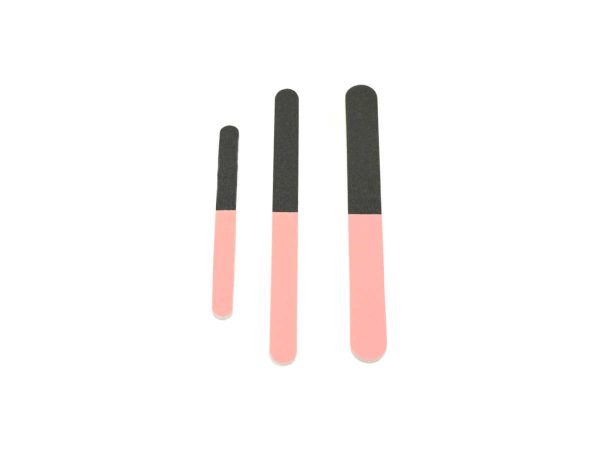
Emery Files
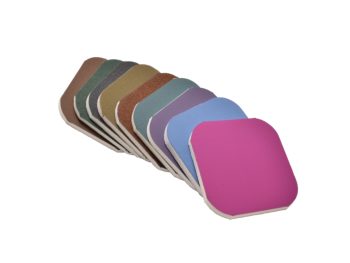
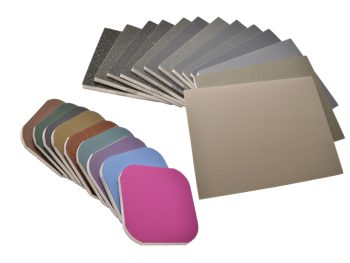
Abrasive Hand Pads
Micro-Mesh Pads (Soft Touch) – Cushioned Abrasive – Regular, MX (Individual Pads & Sets)
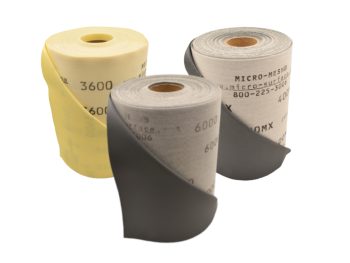
Abrasive Sheets & Rolls
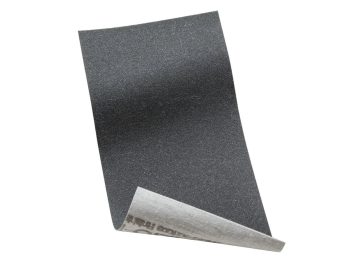
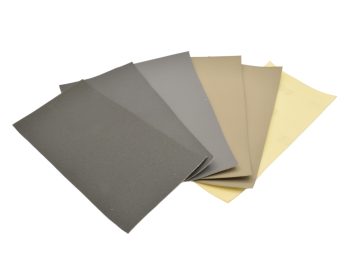
Abrasive Sheets & Rolls

Micro-Mesh Grits & Grades Explained
Which Micromesh grades will suit you? There are 4 types of Micro-Mesh stocked by Moleroda. [...]
Jun

Smoothing & Finishing Wood with Micro-Mesh
Do you have a wooden sculpture that needs finessing? Do you have a kitchen surface [...]
Apr

How Violin Makers Use Micro-Mesh
How to polish violins and repair and restore using Micromesh abrasives. Approved for use on [...]
Oct
Polishing & Finishing Solid Surface Worktops with Micro-Mesh
Moleroda stocks a range of cushioned finishing abrasives, available in formats useful for both industrial [...]
Jul