

When selecting a mass finishing process, manufacturers often compare magnetic finishing and vibratory finishing. Both are well-established methods used to deburr, polish, and improve surface quality—but they perform very differently depending on part geometry, material, and production requirements.
This guide explains the practical differences between magnetic finishing and vibratory finishing, where each process excels, and how to decide which is most suitable for your components.

What is Vibratory Finishing?
Vibratory finishing uses a vibrating bowl or tub filled with abrasive or polishing media. Parts and media rub against each other to remove burrs, smooth edges, and improve surface finish.
It is widely used for:
- Bulk processing of robust parts
- External edge deburring
- Cost-effective finishing of simple geometries
🔗 Learn more about the benefits & uses of vibratory finishing
What is Magnetic Finishing?
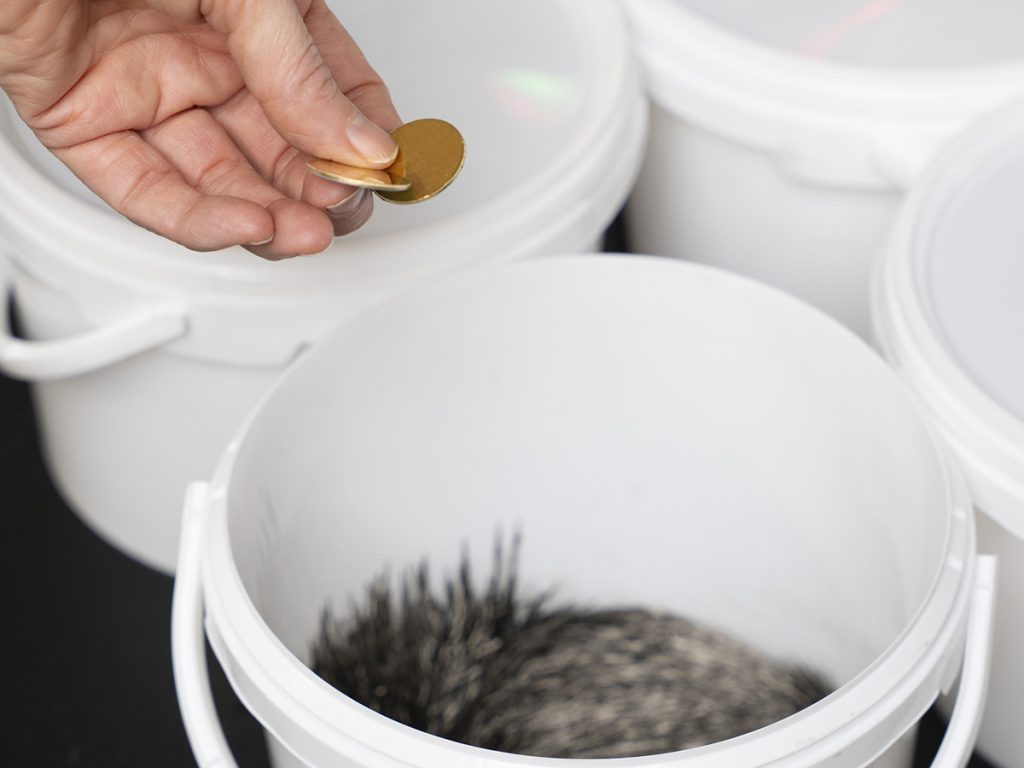
Magnetic finishing uses a rotating magnetic field to energise stainless steel pins. These pins flow rapidly around and through parts, polishing surfaces and removing micro-burrs—even inside internal features.
It is typically used for:
- Internal bore and thread finishing
- Small, intricate, or delicate components
- High-precision surface finishing
🔗 Learn more about the benefits & uses of magnetic finishing

1 - Ability to Reach Internal Features
Vibratory Finishing
-
- Limited access to internal bores, blind holes, and threads
- Media can bridge or become trapped in small features
Magnetic Finishing
-
- Pins actively flow through internal features
- Highly effective for cross-holes, threads, and blind bores
✔ Advantage: Magnetic Finishing
2 - Consistency and Repeatability
Vibratory Finishing
-
- Results can vary based on media wear and load size
- Edge rounding may be inconsistent on small parts
Magnetic Finishing
-
- Controlled magnetic energy delivers repeatable results
- Minimal edge rounding and excellent process stability
✔ Advantage: Magnetic Finishing
3 - Cycle Time
Vibratory Finishing
-
- Typical cycles range from 30 minutes to several hours
- Longer times needed for fine surface finishes
Magnetic Finishing
-
- Typical cycles range from 5–15 minutes
- Fast results due to high-energy pin movement
✔ Advantage: Magnetic Finishing
4 - Part-to-Part Contact
Vibratory Finishing
-
- Parts contact each other during processing
- Risk of surface damage on delicate components
Magnetic Finishing
-
- Pins act as a buffer between parts
- Reduced risk of part-on-part damage
✔ Advantage: Magnetic Finishing
5 - Batch Size and Throughput
Vibratory Finishing
-
- Excellent for large batch volumes
- Well suited to simple, durable parts
Magnetic Finishing
-
- Optimised for smaller batch sizes and precision parts
- Often used as a secondary finishing step
✔ Advantage: Depends on application
6 - Operating Cost
Vibratory Finishing
-
- Lower initial equipment cost
- Media wear and replacement over time
Magnetic Finishing
-
- Higher initial investment
- Lower labour input and shorter cycle times
✔ Advantage: Application dependent

Vibratory finishing is often the right solution when:
- Parts are robust and relatively simple in shape
- Internal features are not critical
- Large batch volumes are required
- Lower capital investment is a priority
For many manufacturers, vibratory finishing remains a highly effective and economical process.
🔗 Explore our full range of vibratory finishing equipment & consumables
Magnetic finishing is typically the better option when:
- Parts include internal bores, threads, or cross-holes
- Manual deburring is time-consuming or inconsistent
- Surface finish repeatability is critical
- Short cycle times are required
- Components are small, delicate, or high value
🔗 Explore our full range of magnetic finishing equipment & consumables

In many production environments, magnetic finishing and vibratory finishing are complementary rather than competing processes.
A common approach is:
- Vibratory finishing for bulk deburring or pre-finishing
- Magnetic finishing for final internal finishing and polishing
This combination maximises throughput while ensuring high-quality results on critical features.

Choosing between magnetic finishing and vibratory finishing depends on:
- Part geometry and feature complexity
- Material type
- Required surface finish
- Batch size and production volume
If magnetic finishing has been identified as the right process for your application, the next step is implementing it as a complete, production-ready system rather than as a standalone machine.
or
🔗 Explore the range of products needed to implement your MagForce magnetic finishing system
- Vibratory finishing excels at bulk processing of simple, robust parts
- Magnetic finishing excels at internal features, precision parts, and short cycle times
- Many manufacturers benefit from using both processes strategically
Understanding the strengths and limitations of each method allows you to select the most efficient finishing solution for your parts.